Every Fixture Knew Where It Was
This week: eighty lights that told the console where they were, a diffusion pipeline that treats a building as its own constraint, and a hall in Santa Fe holding two kinds of almost-nothing.
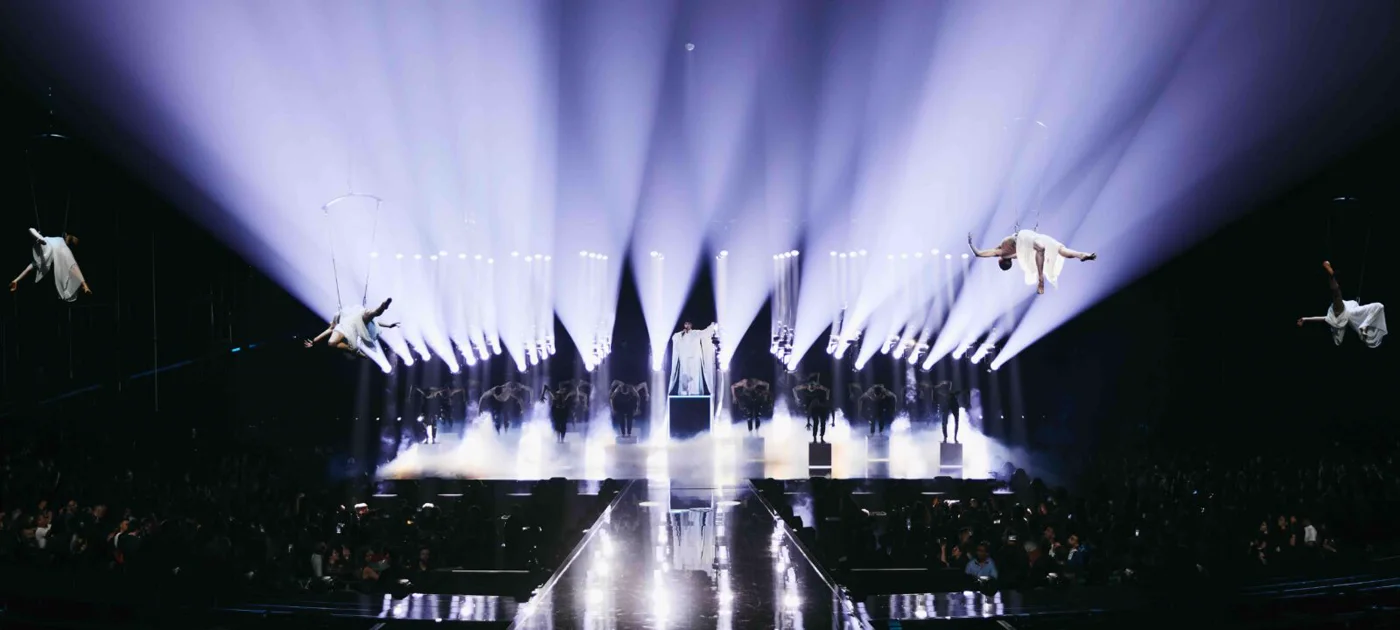
The stage for the seventieth Eurovision Song Contest, built into the Wiener Stadthalle this May, did something quietly unusual with eighty of its lights. Each Ayrton Rivale Profile hung from its own gyroscope-stabilised winch, moving in X, Y and Z, and each one reported its position back to the lighting console continuously. That single detail undoes an old constraint. A moving light that is itself being moved normally loses its aim; here the desk always knew where the fixture was, so the Follow-Me tracking system could hold focus on a performer while the fixture flew above them. Tim Routledge's design was the first for the contest to run entirely on LED and laser sources, set against Florian Wieder's curved leaf-form floor and backdrop. The video system was equally direct about its intentions: every signal ran natively over SMPTE ST 2110, from media servers to screens, across more than 49 million pixels, with no SDI, no HDMI and no conversion anywhere in the chain. Even the floor marks were digital, drawn into the LED surface instead of taped onto it.
Moment Factory publishes what it takes to make diffusion models respect a building
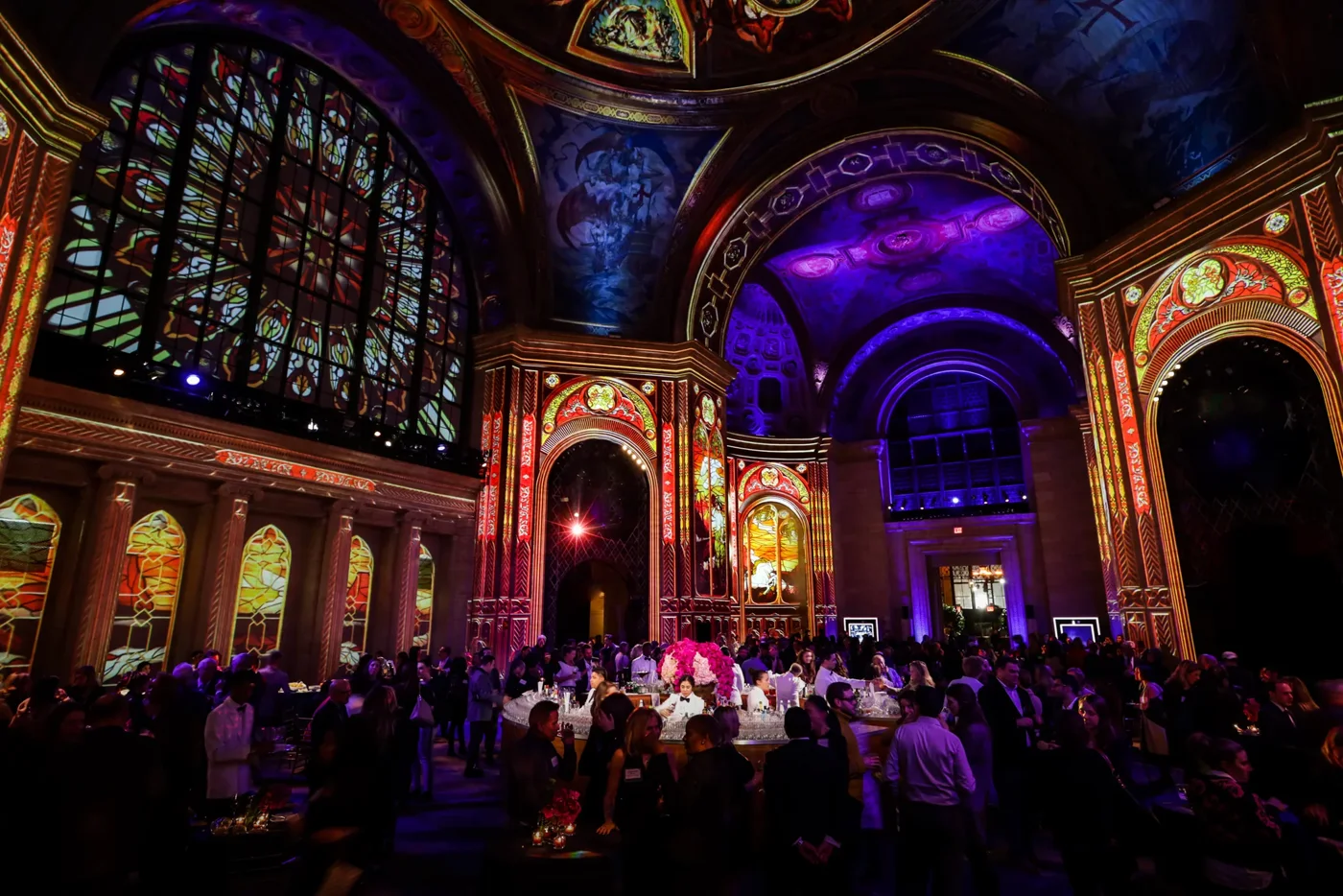
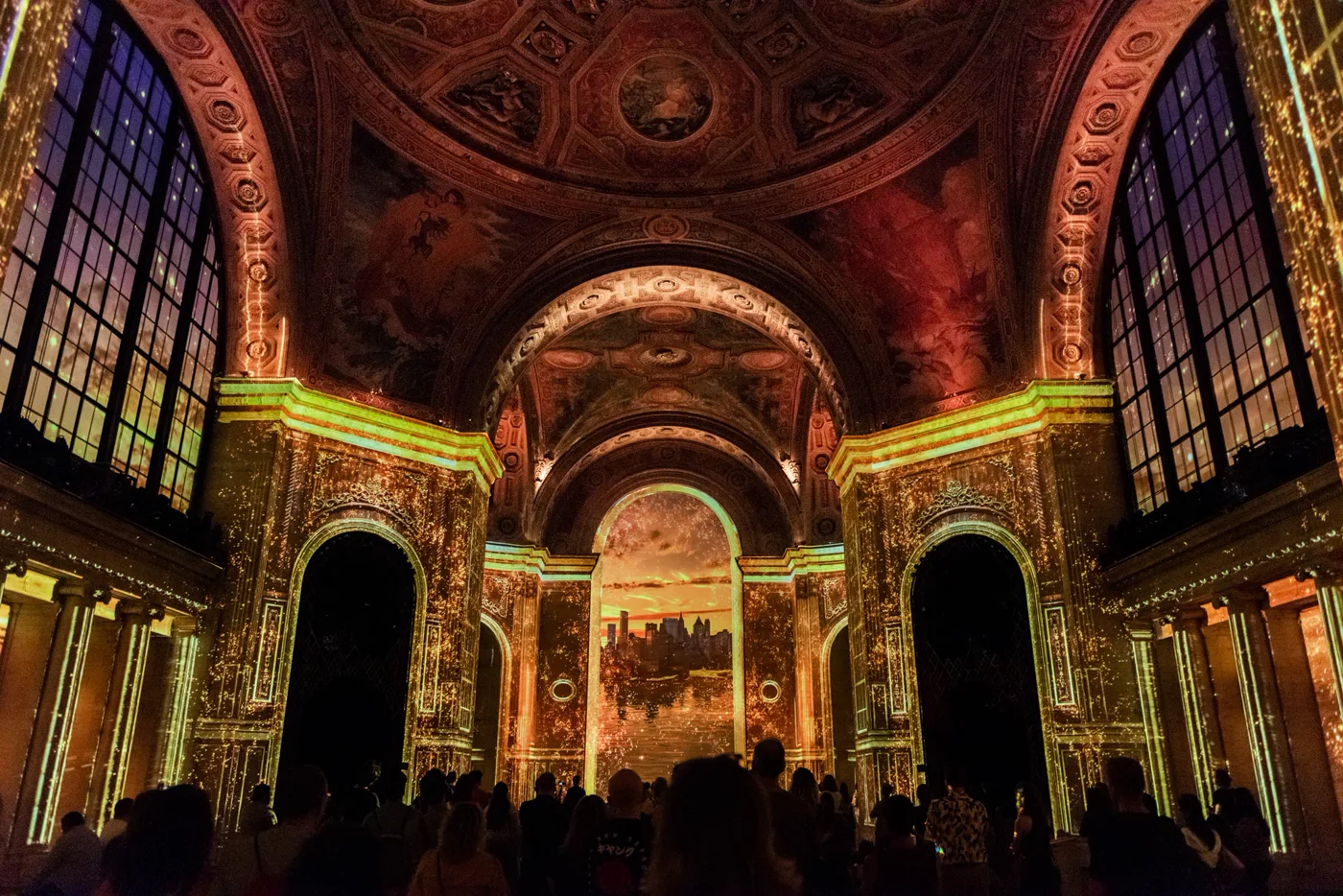
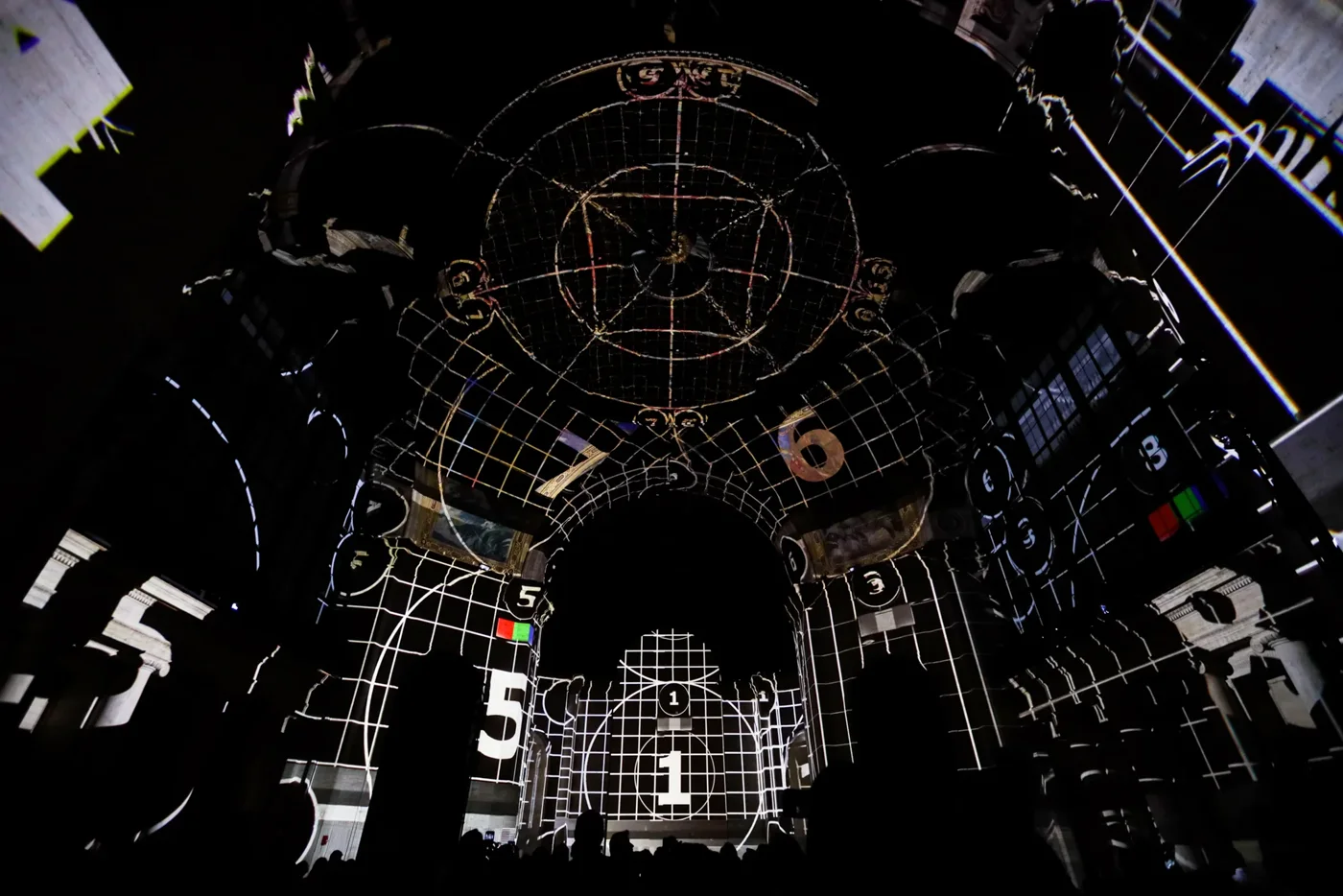
Generative image models are indifferent to architecture, which is a problem when the canvas is a Beaux-Arts hall. In a talk given at SIGGRAPH in Los Angeles this July — "When Diffusion Hits the Wall," by Guillaume Borgomano, Conner Tozier, Nelly Roxanne Karimpour-Harvey and Julien Bigeault — Moment Factory set out the method it now uses: the surface itself becomes the constraint. Unwrapped UV templates, 360-degree layouts and projector-frustum and depth maps are fed in as spatial conditioning, so the model composes for the room rather than being corrected afterwards. Low-resolution passes go into the media-server timeline within minutes for validation; once a composition is approved, inpainting protects it while regions are revised; final frames upscale to 18K in about twenty minutes. The demonstration that makes the case: swapping the surface template and re-running the whole pipeline, with no assets re-authored and the composition intact. Validated in situ on the seventeen-projector, 18K canvas at Cipriani 25 Broadway in New York.
A museum facade that becomes a screen after dark
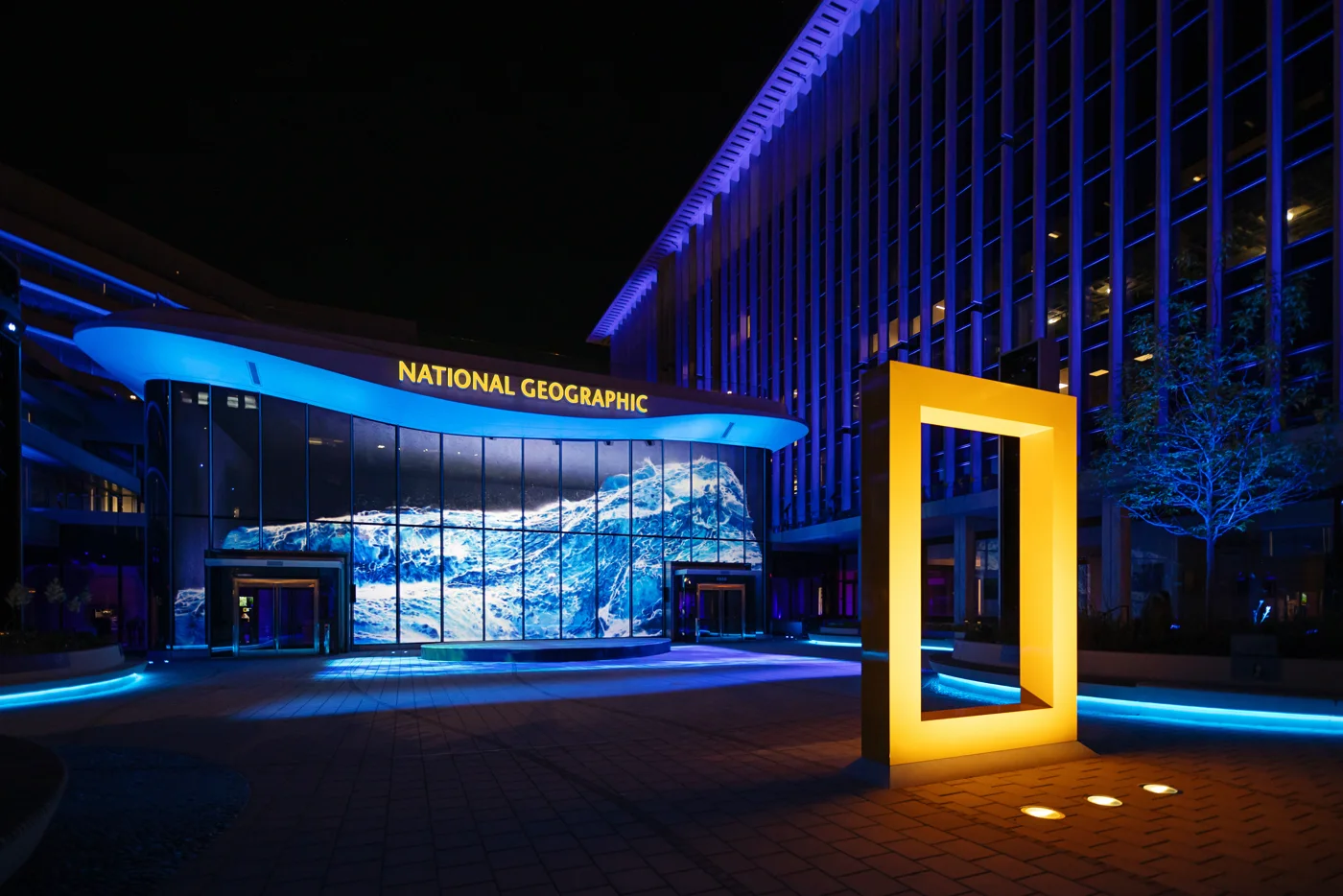
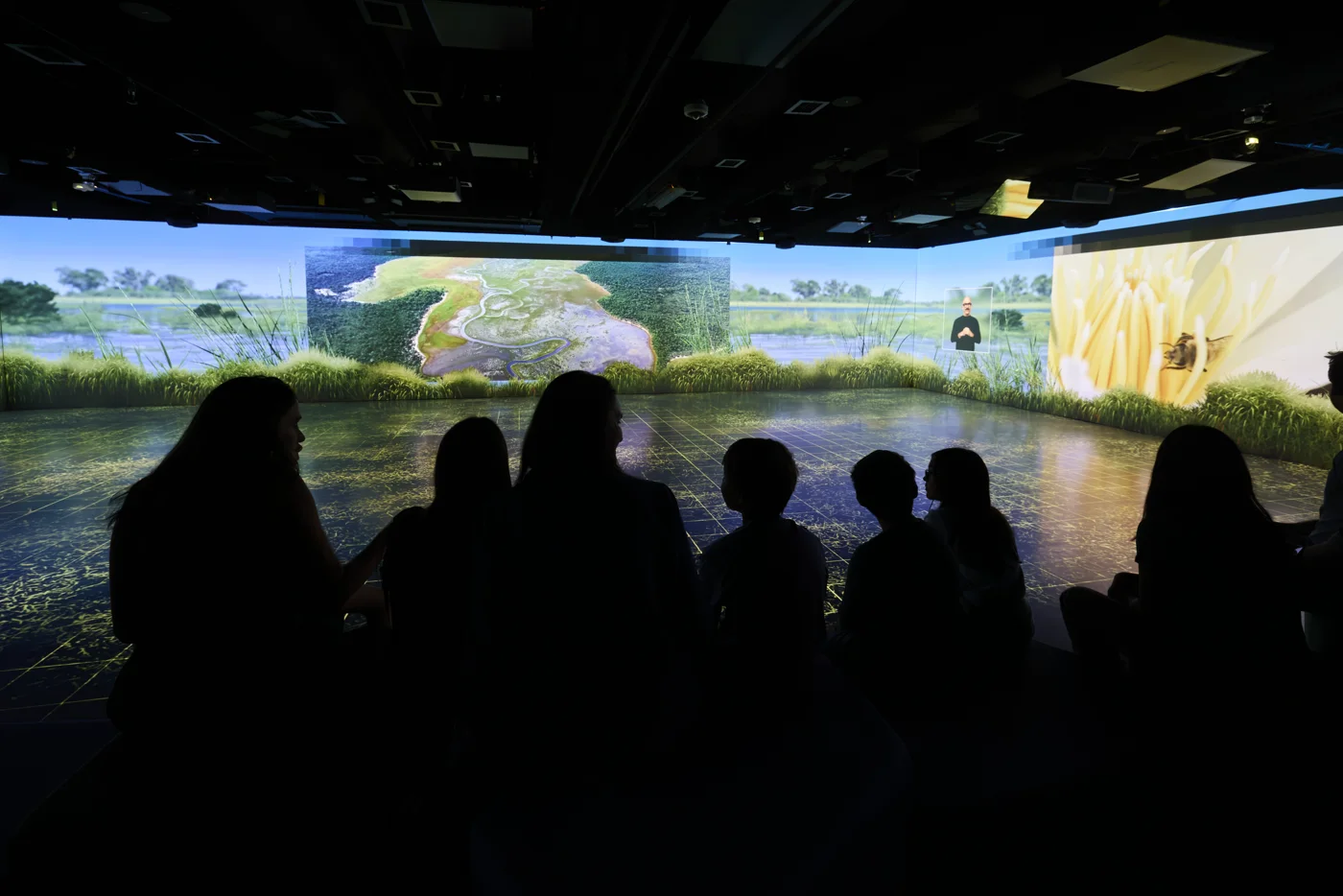
The National Geographic Museum of Exploration opened at the Society's transformed Washington headquarters on 26 June, with over 100,000 square feet of public space. The piece that changes at nightfall is the Pavilion facade: what the Society describes as the world's largest installation of smart glass used to create dynamic projections, worked together with high-resolution LED and building lighting into a single canvas for a seventeen-minute nightly show, Wonders of Our World: Ocean. Inside, the Jack and Laura Dangermond | Esri Geoverse wraps 270 degrees of projection around an interactive floor with spatialised audio. Moment Factory's creative director Nadia Lakhdari has been plain about the method on an untested surface: repeated mock-ups, small and large, because nobody had made a building do this before. On view: the museum courtyard, Washington DC — nightly after the museum closes, a $10 add-on to admission.
Doug Aitken fills a New York gallery with seven screens and a Dudamel-conducted score
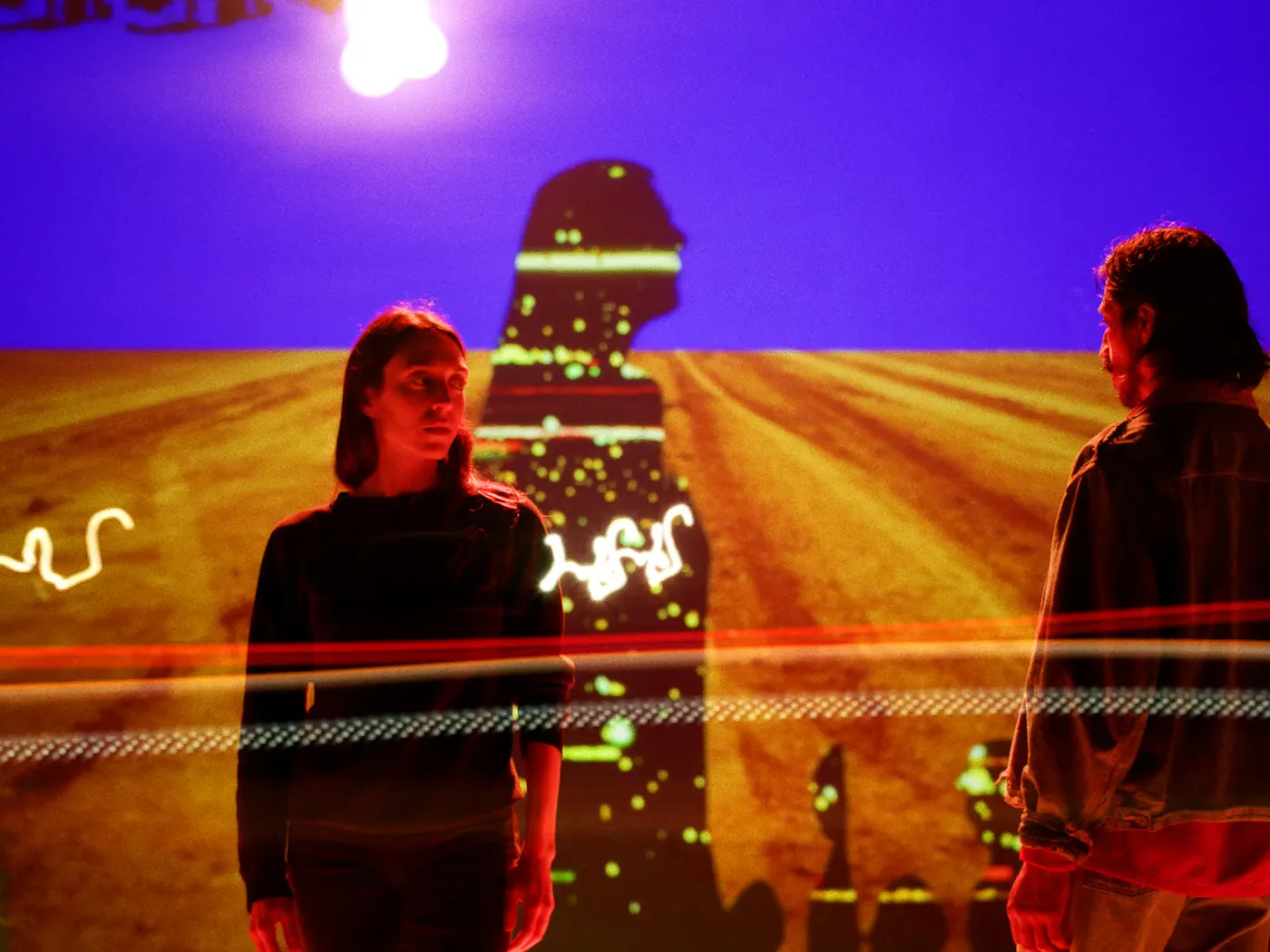
Lightscape is a film held across seven channels in the 12,000-square-foot Darla Moore Gallery, and it is as much a score as an image. Aitken built it with the Los Angeles Master Chorale and the Los Angeles Philharmonic, with recordings of Philip Glass, Steve Reich and Meredith Monk conducted by Gustavo Dudamel, plus new music from Beck, LA LOM, and Aitken with Grant Gershon. The result is offered as a portrait of the country rather than a landscape of it. It ran through the summer with live performances threaded into the gallery — the Master Chorale, William Basinski, Suzanne Ciani, the Sun Ra Arkestra — all of which have now passed; the film remains. Worth noting from here: Aitken works out of Venice, California, and this is the LA practice exporting east rather than the other way round. On view: The Shed, New York — through 13 September, choose-what-you-pay.
via The Shed ↗
Larry Bell and Susanna Fritscher put two kinds of almost-nothing in the same room
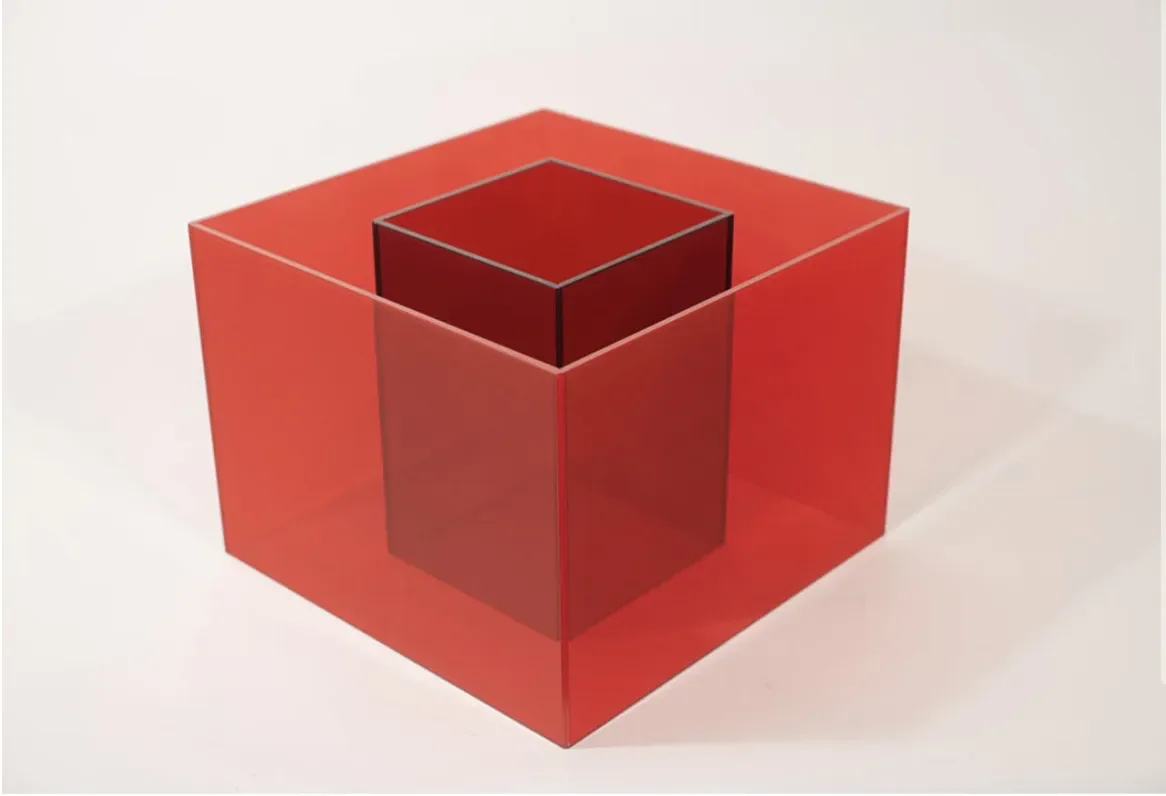
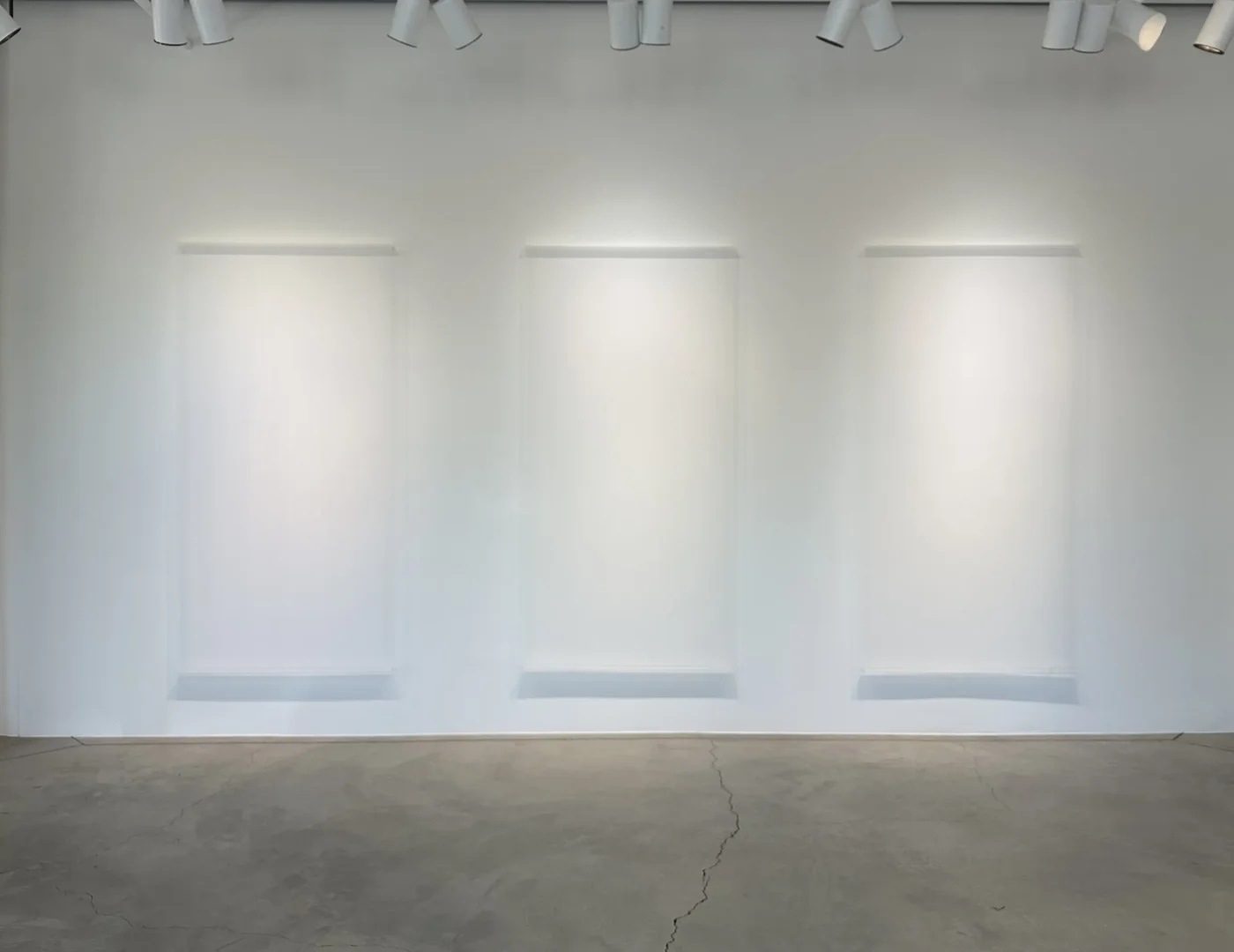
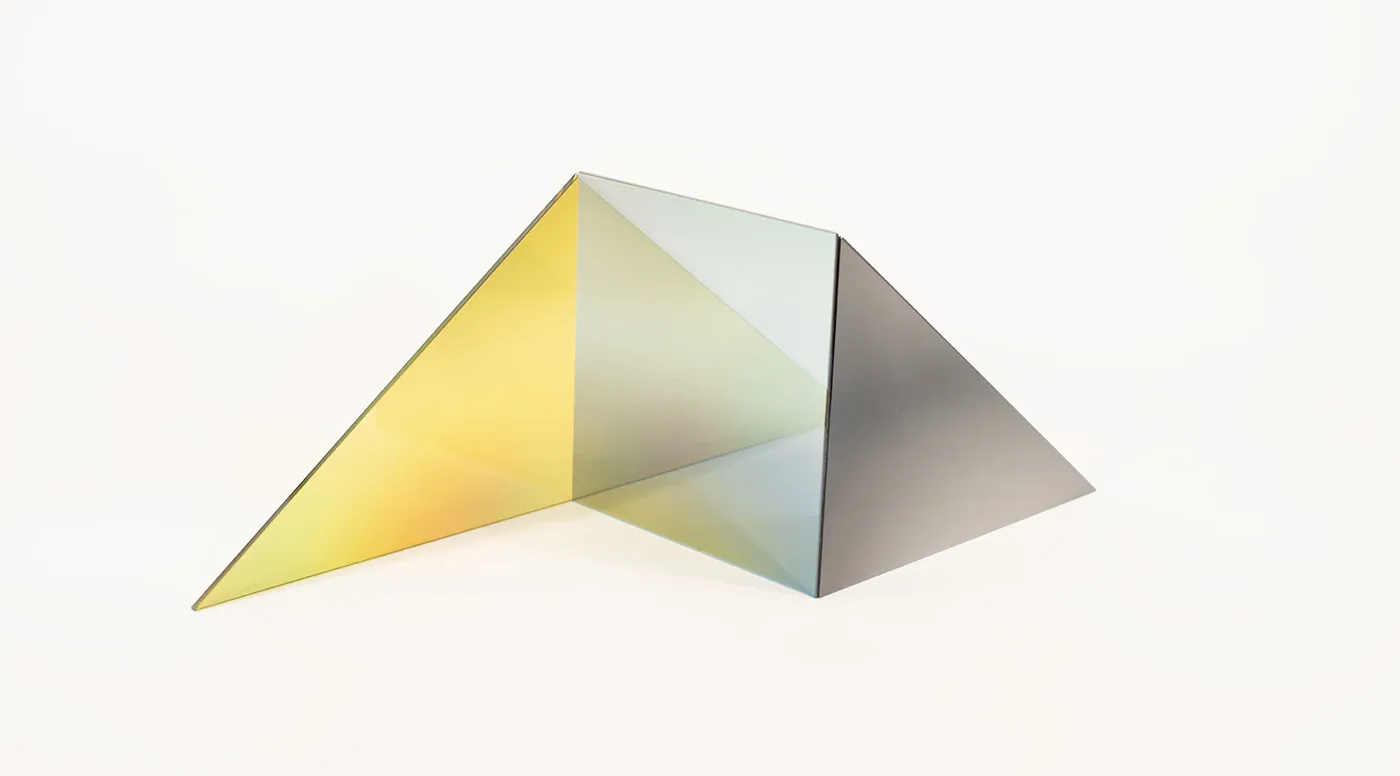
Bell has been coating glass in his own high-vacuum thin-film chamber since 1969, and the works here — Untitled (Red Poppy/Habanero), a sculpture of nested glass cubes, and Triolith (Spa/Sunflower/Dusk) — do what his work has always done: make a solid surface behave like a condition of the air. Opposite them, in her first exhibition in the United States, Susanna Fritscher hangs unthreaded featherlight textile between sheets of plexiglass in the Unthreaded (Détissé) series, and lets the fibres go loose entirely in Ghosts (Fantômes). Philippe-Alain Michaud of the Centre Pompidou wrote the accompanying text. Two practices half a century apart arriving at the same reluctance to be an object. On view: Pie Projects, 924B Shoofly Street, Santa Fe — through 29 August.
A dead 4D cinema becomes a rotating theatre where the targets are physical
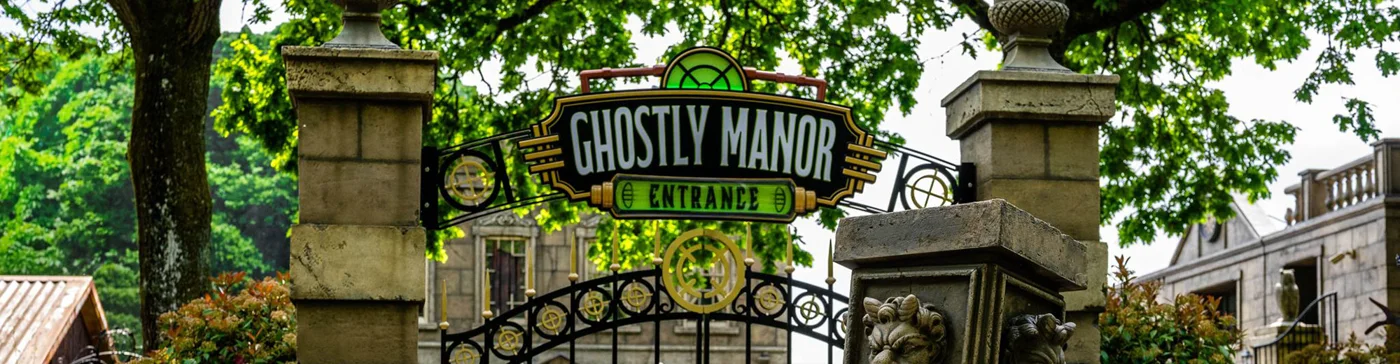
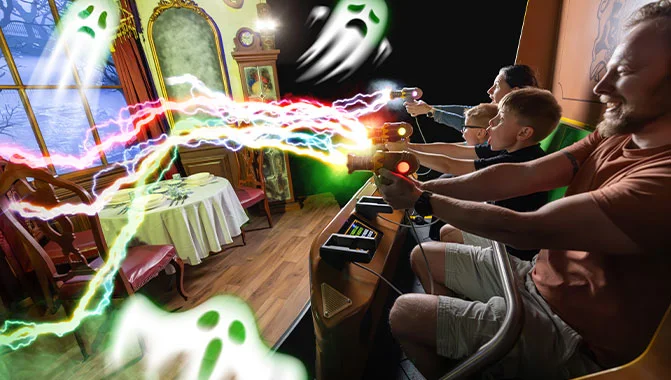
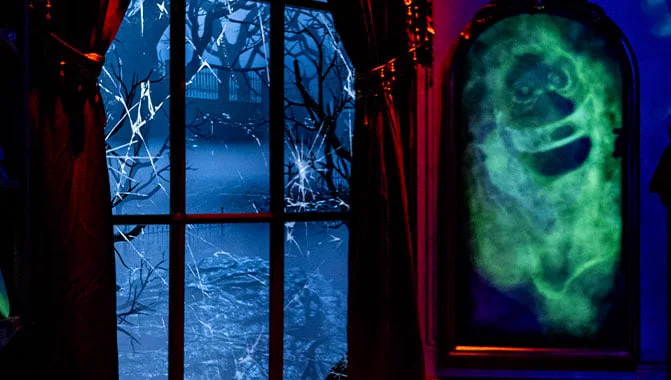
Paultons Park in Hampshire had an early-2010s 4D cinema that guests walked past. Rather than refresh the content, the park emptied the shell and dropped a Gameplay Theater into it — a format developed by Mack Rides and Lagotronics Projects, here in its smallest version, roughly sixteen metres across and rated at around 498 guests an hour. Eight-passenger vehicles sit back to back and rotate continuously between scenes, so the audience is turned rather than transported. What makes Ghostly Manor worth a second look is that riders shoot at a mix of surfaces — physical decoration, animatronics, projection mapping and full media screens — across eight scenes, rather than at a single screen. Six Christie DWU1100-GS and two DWU1400-GS laser projectors on ultra-short-throw lenses cover roughly ten metres by three and a half. The attraction cost £3.5 million and has been open since May 2025. The park's Lawrence Mancey has been unusually candid in trade coverage about the limit: a ride that is too screen-heavy breaks the immersion.
Light Factory — Fényerőmű 2026
Inota, Hungary — closes 24 August. The light-art exhibition inside the decommissioned power plant; the INOTA music and AV festival follows on the same site 27–30 August.
Robin Fox — PRESENCE, Main Hall run
Melbourne — 21 to 27 August, free, in the Main Hall, with a ticketed full concert on closing night 30 August. Fox turns Melbourne Town Hall's grand organ into a laser and sound instrument.
Larry Bell + Susanna Fritscher — as Light, as Air
Santa Fe — closes 29 August.
Regine Schumann — The Fool in The House
Knokke, Belgium — closes 30 August. Fluorescent acrylic that changes register entirely under UV.
Carl Nielsen and Anne Marie Carl-Nielsen Grant 2026, with Olafur Eliasson
Copenhagen — closes 30 August, free. Eliasson is one of six honourees, not a solo.
Victory Over the Sun: Encounters with Light
Durham, UK — opens 22 August, runs to 17 January 2027. The opening exhibition of a purpose-built light-art venue.
Doug Aitken — Lightscape
New York — on view through 13 September, choose-what-you-pay.
via The Shed ↗
Olafur Eliasson — Your curious journey
Manila — on view through 15 November. The final stop of the touring survey.
via MCAD Manila ↗
Fifteen years after Indiana
Jim Digby, who co-founded the Event Safety Alliance in the aftermath of the Indiana State Fair stage collapse, marks the fifteenth anniversary by pointing at what the industry did not build. There are standards now, and they are good ones. But the role that integrates every trade on a site — the person who makes the go or no-go call — still requires no proof of competency anywhere in the business. Meanwhile the shows have got bigger: average attendance is at an all-time high of 19,104, up from 13,397 in 2019, and 56,272 for stadiums. It is a short, unsentimental piece and worth the ten minutes.
via Live Design ↗
Curated by Neves Creative. Every item links to its original source.