The Wall Is Not the Show
This week: forty profiles hidden behind Bruno Mars's video wall so the light never shows where it came from, content argued out on the rehearsal stage rather than on paper, and hundreds of glass rods holding one moment of wind.
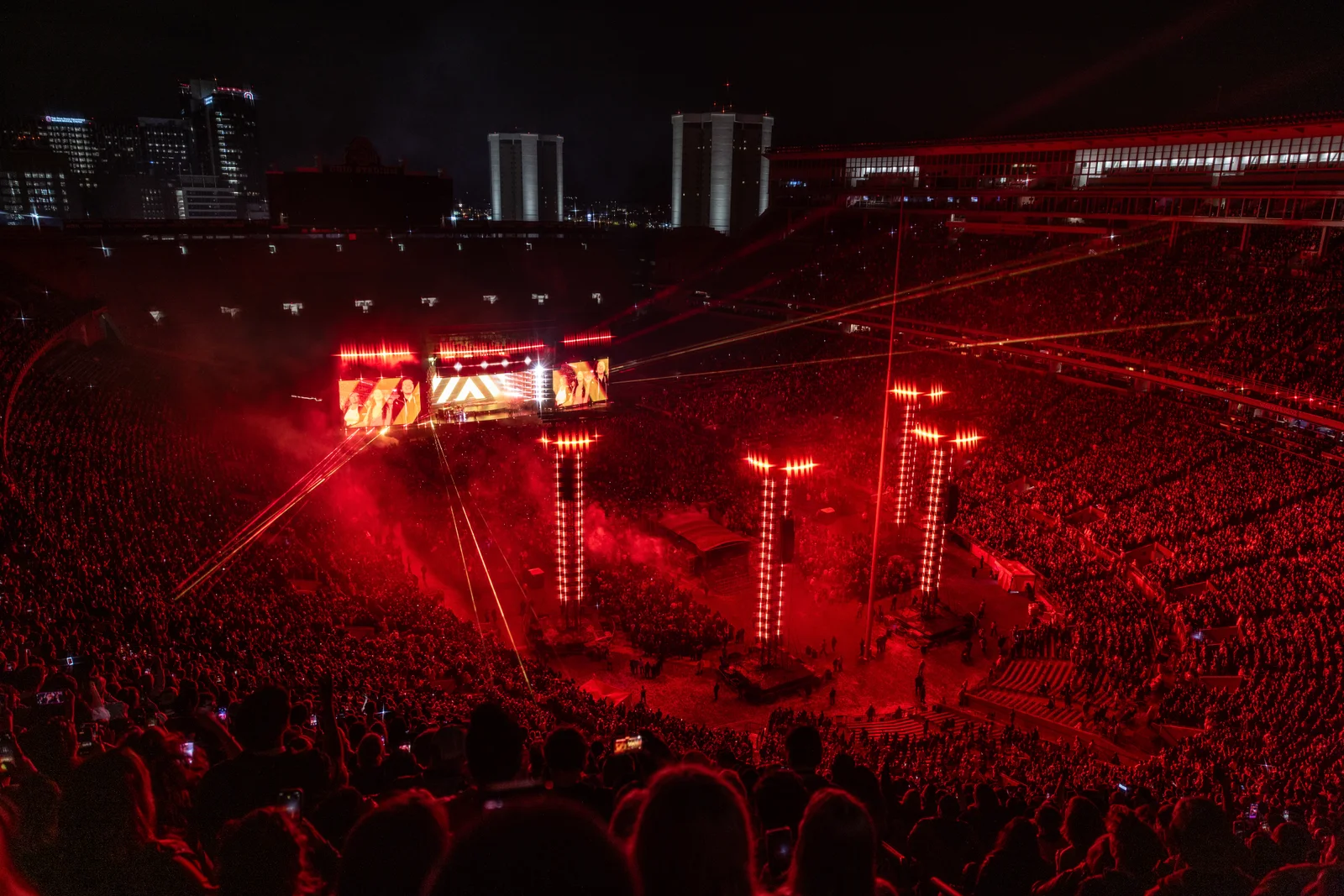
1,543 fixtures on a 190-foot-wide stage, 34 trucks to move them and 54 more for the steel roof that holds them up. Those are Chauvet Professional's numbers for Bruno Mars's Romantic tour, given in a June write-up by way of lighting designer Whitney Hoversten. The number that matters to this issue is a smaller one: TPi says 40 Veloce Profiles sit on ladders upstage of the video wall, placed to punch through the screen and lift the video without showing themselves or flattening what is on it. The content they are lighting was not settled on paper either. Drop the Spoon, whose core team spent more than a decade as Franco Dragone Entertainment Group's internal video department, developed and refined it alongside the performance in VYV's PHOTON media server, mixing pre-rendered loops with real-time effects, with VYV's own developers on site able to reprogram PHOTON to take a creative request, across a compressed four weeks of rehearsal in Nashville. At Ladbroke Hall this week, DRIFT answers the same question from the other end, and puts a small light inside each of hundreds of glass rods. No source we read gives the screen sizes, and none says how any of it is cabled or powered.
The Wall Is Not the Show
Jean-Luc Gason, co-founder of the Belgian content studio Drop the Spoon, put the problem in two sentences in Blooloop's feature on the Bruno Mars tour: "People don't come to look at screens. They want to see Bruno." A stadium stage carries a great deal of LED, and the lighting designer's question is where the light sits next to it.
This week gives two answers, and they are opposites. TPi says the Mars rig has 40 Veloce Profiles on ladders upstage of the video wall, there to punch through the screen and augment the video "without revealing the lights behind or washing out the content" — light behind the wall, working on it, never seen. And at Ladbroke Hall, DRIFT does without a screen altogether: no pixels at all, a small light inside each of hundreds of glass rods, and the glass is the display. None of the Mars pages says how any of it is cabled or powered, which is the first thing we would ask.
Bruno Mars's visuals were argued out on the rehearsal stage, not on paper
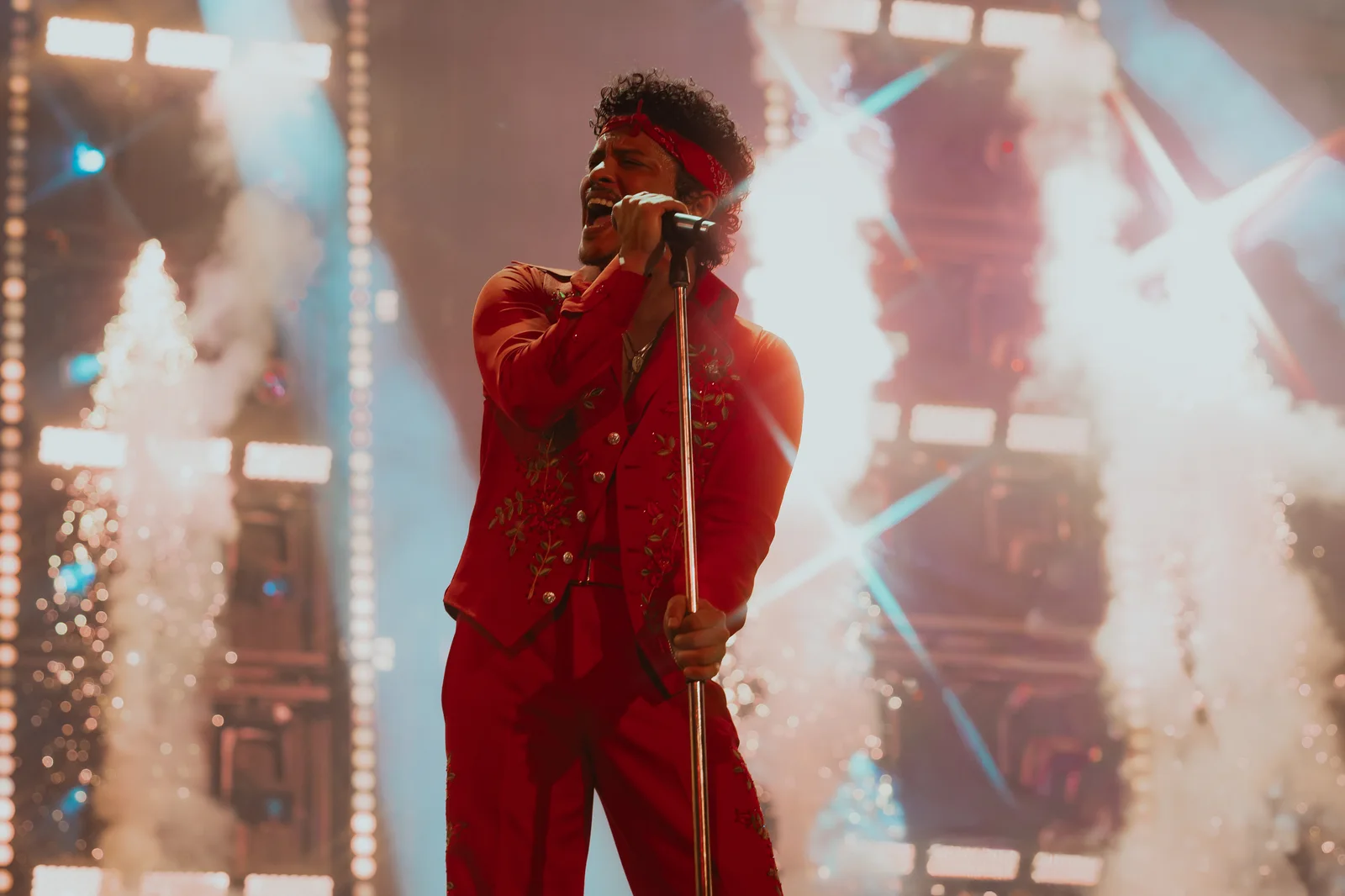
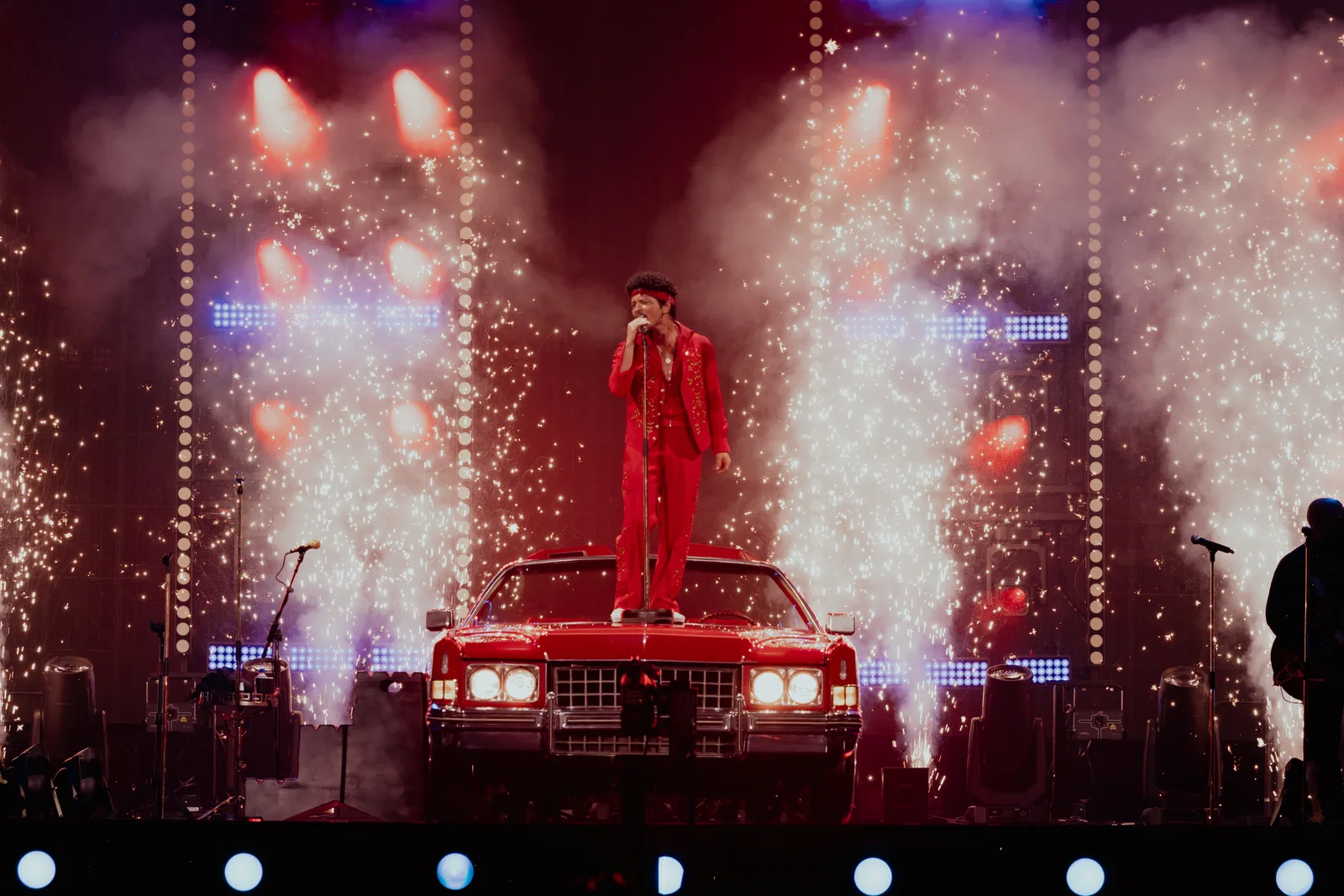
Most of what is public about this tour comes from vendors, so we attribute each fact to its source. Chauvet Professional's June write-up, by way of lighting designer Whitney Hoversten, gives a 190-foot-wide stage, 1,543 fixtures, 34 trucks plus 54 more for the steel roof, and 292 STRIKE V strobe-wash units supplied by Fuse Technical Group, which Hoversten calls "the foundation of our back wall"; it names Brian Jenkins and Eric Marchwinski as lighting programmers. TPi's July piece, which ends with Ayrton's web address, lists the moving parts: ten rotating truss pillars, each rigged with 14 Rivale Profiles, six of them tracking on and off stage behind Mars; a circular video screen called the Puck, outlined with 10 Rivale Profiles, that tracks and lowers to vertical; and four circular pods carrying 12 Rivales each. Blooloop's feature of 20 October covers the video. Drop the Spoon, whose core team spent more than a decade as Franco Dragone Entertainment Group's internal video department, developed and refined the content alongside the performance in VYV's PHOTON media server, mixing pre-rendered loops with real-time effects, and VYV's developers could reprogram PHOTON on site to accommodate the creative request. Gason's account of rehearsal: "The idea was simple: show the director the idea on stage, for real, not on paper." Rehearsal ran a compressed four weeks in Nashville.
via Blooloop ↗
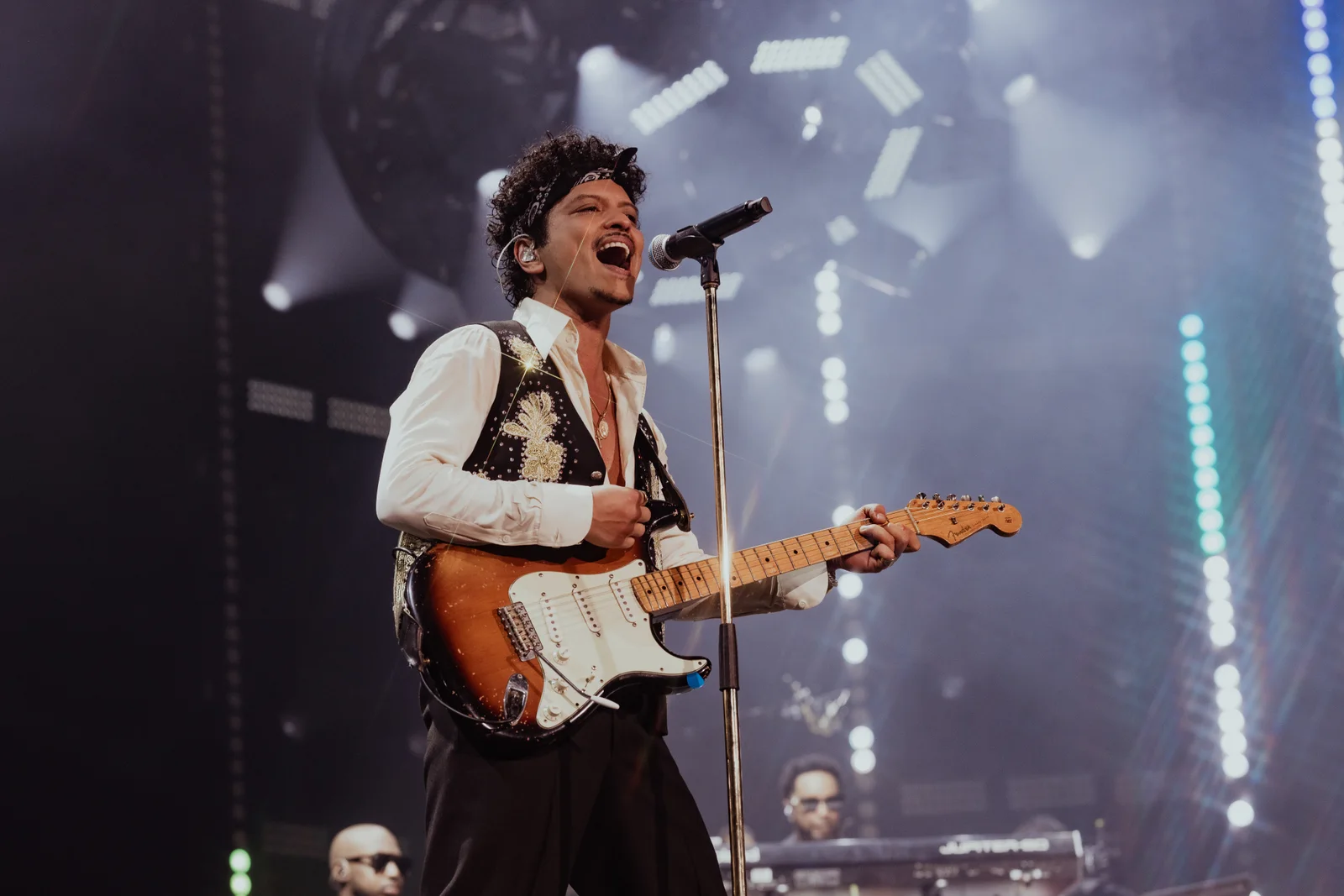
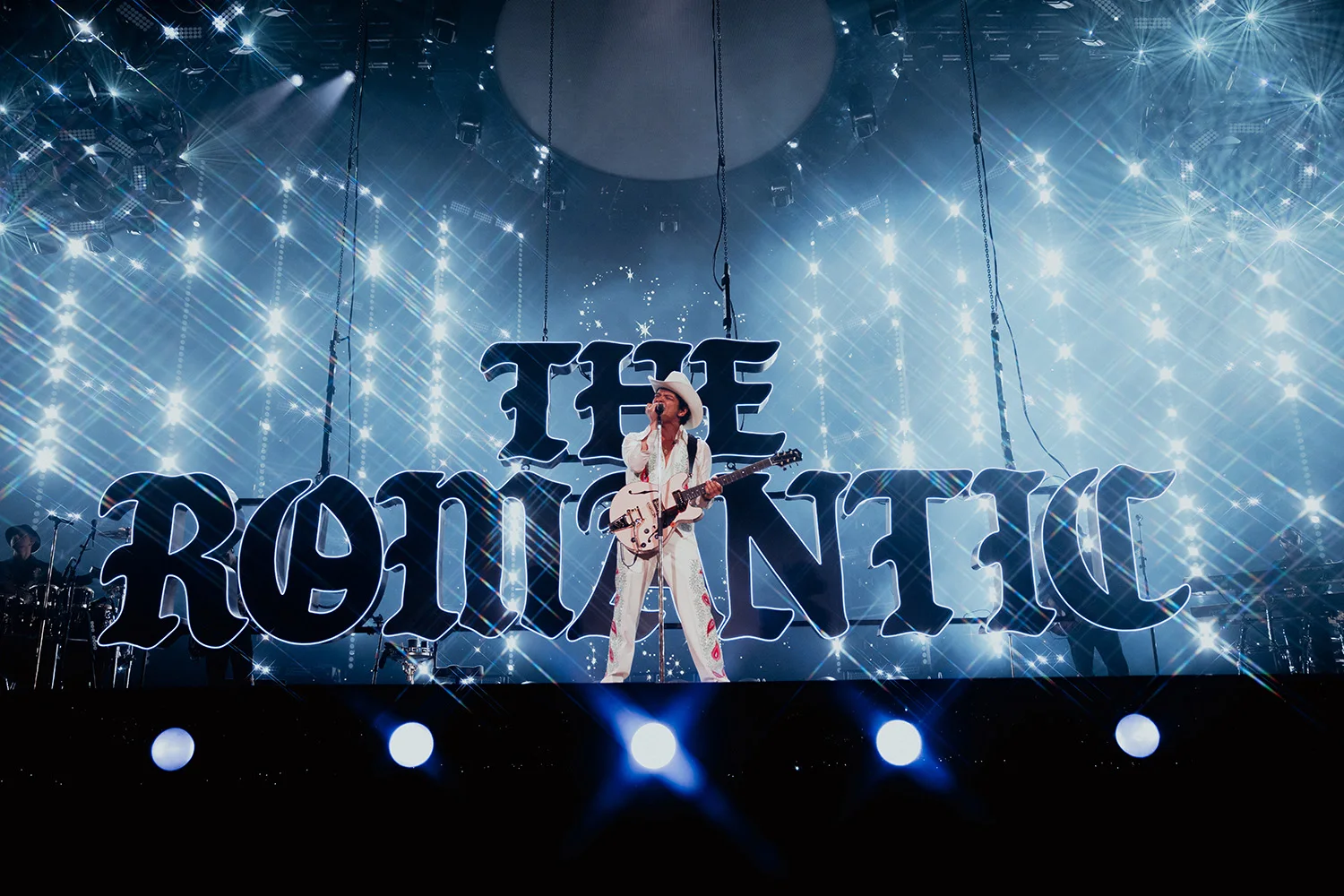
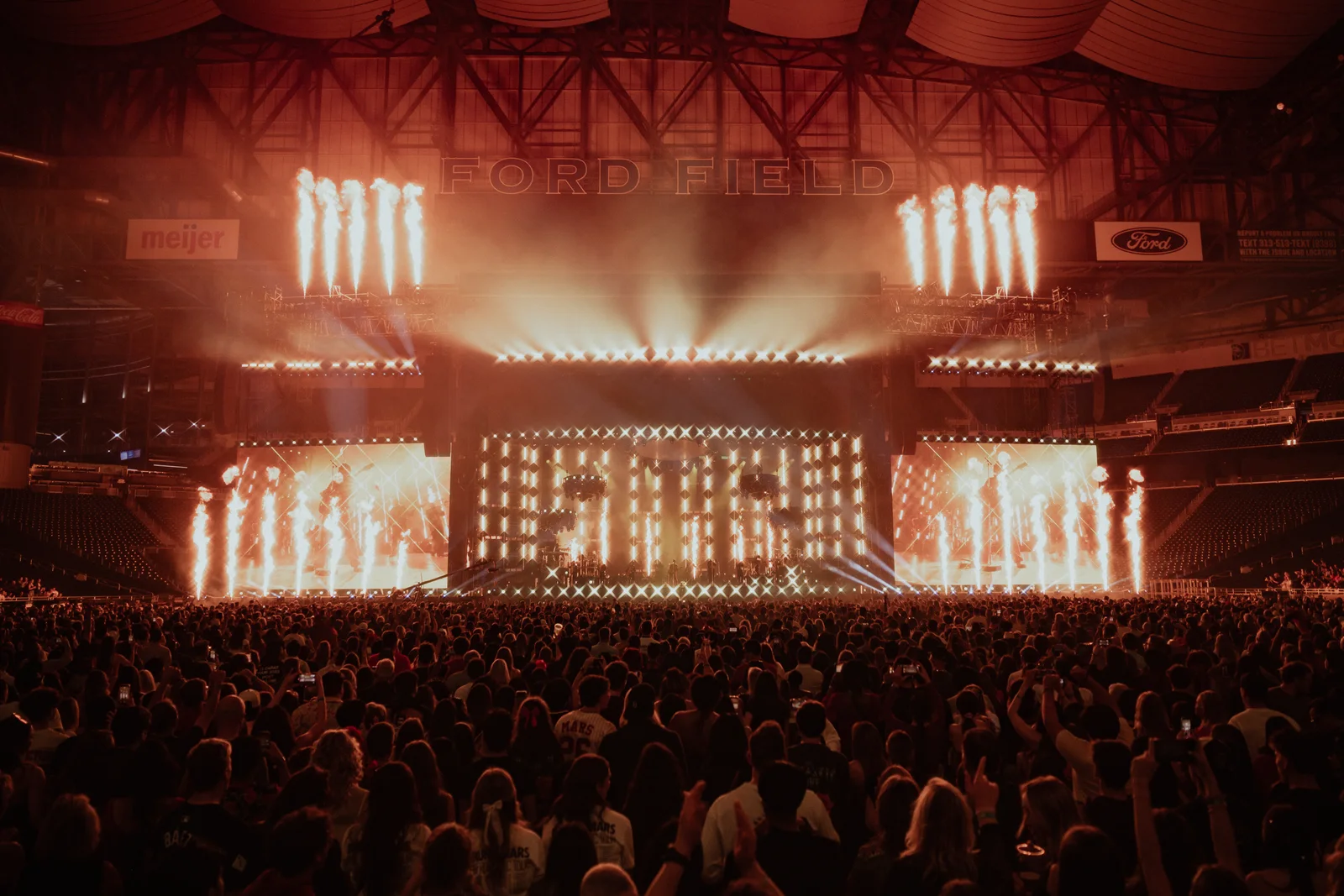
Blooloop says the stained-glass backdrop had to work with Hoversten's lighting design, and TPi says the Veloces upstage of the wall are there so the lights do not show through or wash out the content; the two sources do not link those facts, so we leave them side by side. Developing content in the media server alongside the performance puts the lighting and the video in the same room at the same time. Chauvet has the 2026 run concluding on 8 December in Mexico City, with plans to continue in 2027; Blooloop says the tour "continues across North America, Europe, Mexico, Japan, Australia, New Zealand, and more", with no dates. No source we read gives screen sizes.
Hundreds of glass rods hold one moment of wind, and light moves through them as you walk
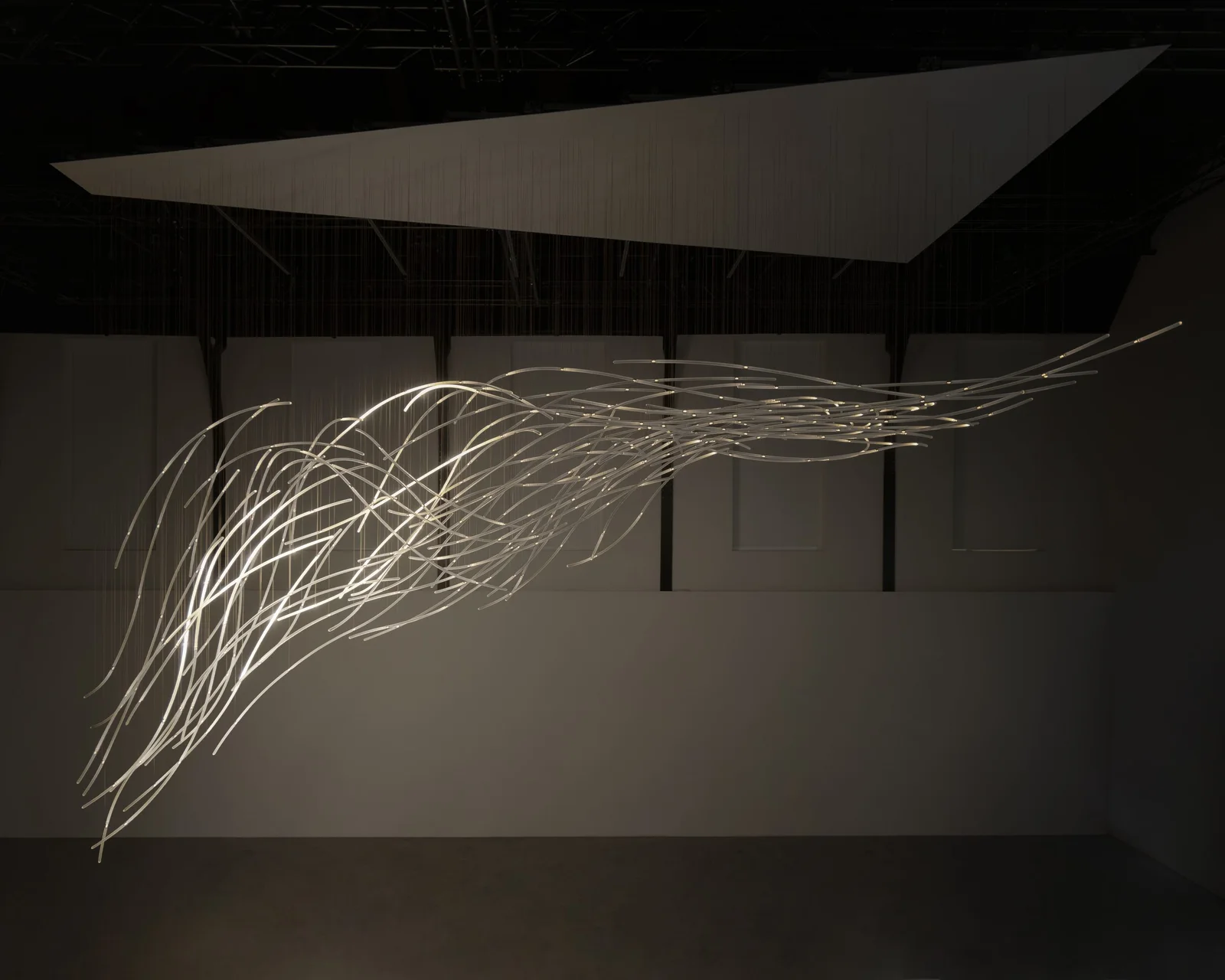
Photo: Benjamin Baccarani, courtesy DRIFT 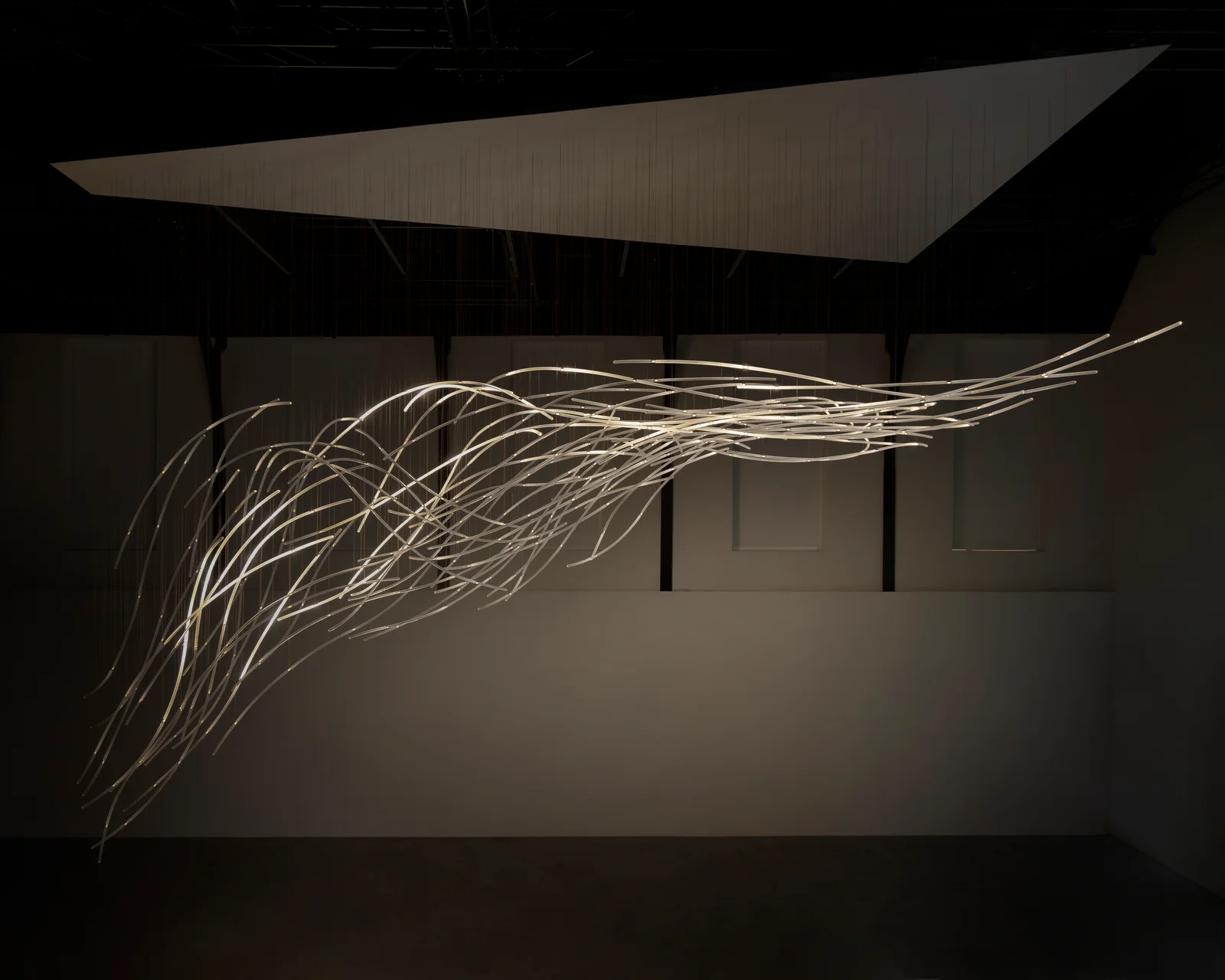
Photo: Benjamin Baccarani, courtesy DRIFT 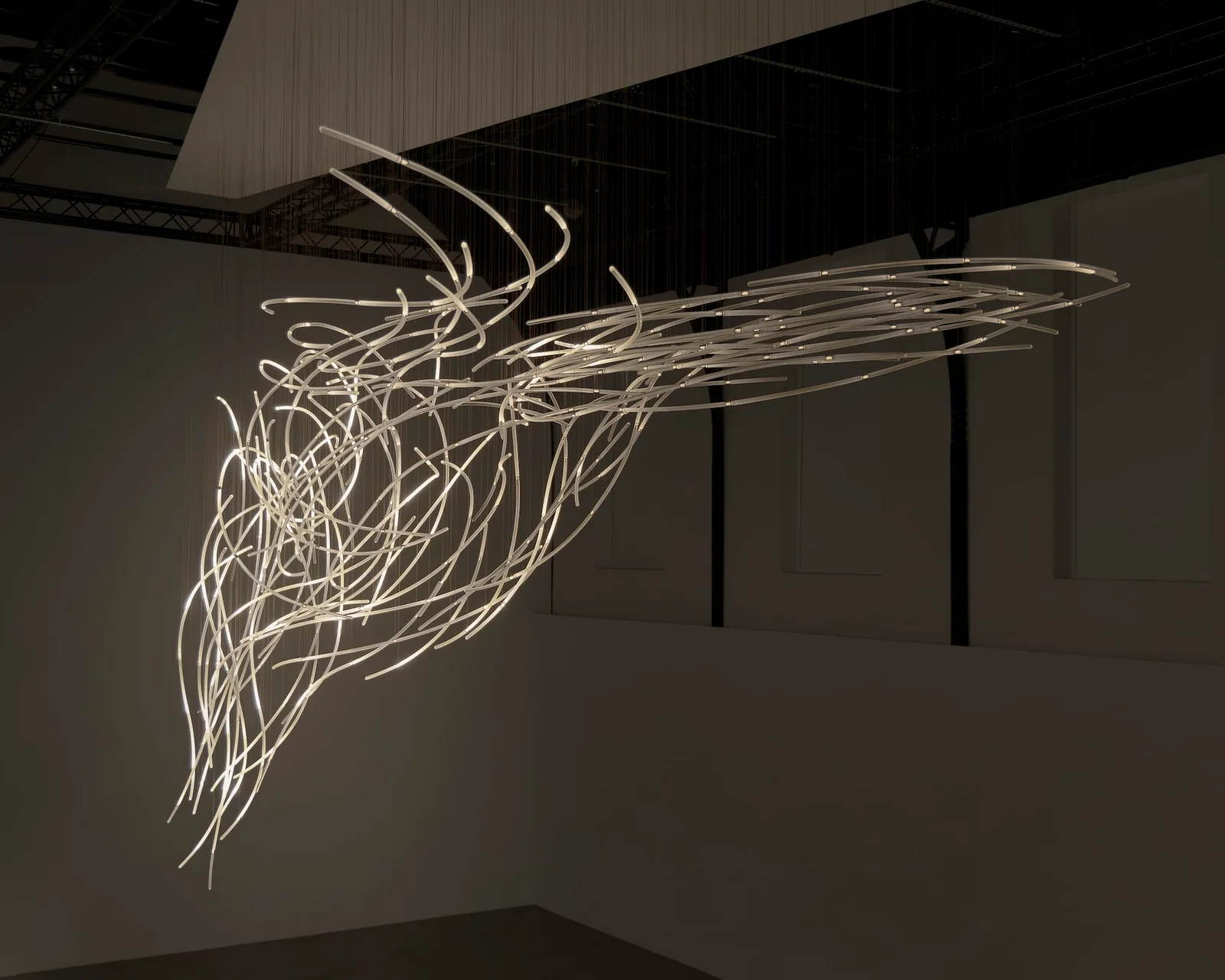
Photo: Benjamin Baccarani. Courtesy Carpenters and DRIFT, shared with permission 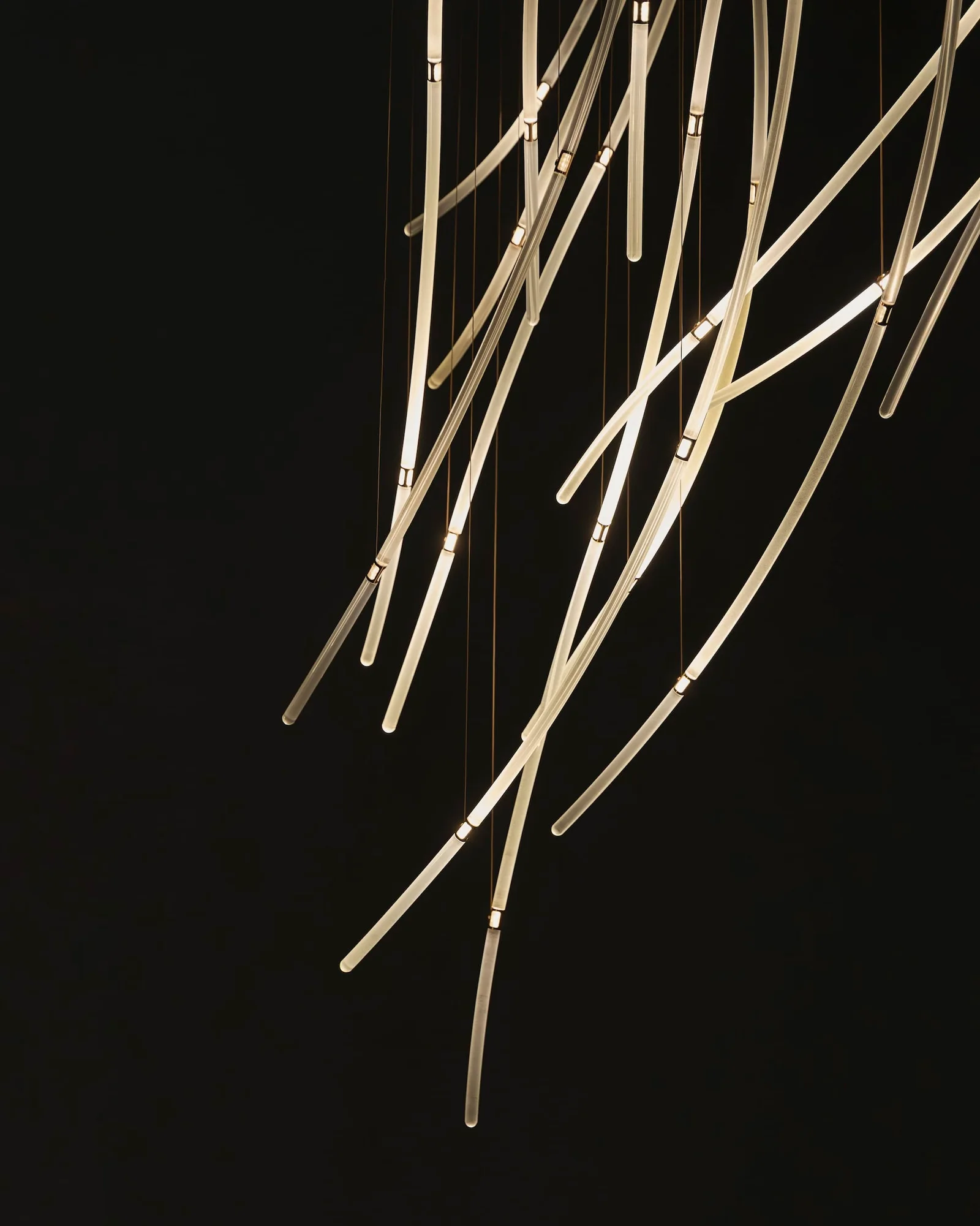
Photo: Benjamin Baccarani. Courtesy Carpenters and DRIFT, shared with permission
DRIFT's Aeolus is, in Carpenters' words, "a suspended sculptural installation composed of hundreds of slender glass rods hanging from the ceiling." The gallery says it uses "digital readings of its architectural surroundings" to visualise wind paths, and that the rods are "arranged to capture a single moment within this continuous flow". A small hidden light sits at the heart of each rod, and Carpenters says the lighting responds in real time to visitors moving through the space. DRIFT's own page puts the idea more simply: "With Aeolus, DRIFT gives physical form to the movement of air." It is at Ladbroke Hall, 79 Barlby Road, Notting Hill, from 13 to 25 October. Admission is not stated on Carpenters' page. Colossal (19 October) says the DRIFT Museum, an 8,000-square-metre space in the Van Gendt Hallen in Amsterdam, is slated to open in early 2027; Carpenters says 2026. No page we read gives the rod count or the dimensions, or says how visitor movement is sensed. Yanko Design lists "borosilicate glass rods, stainless steel nodes, custom LEDs, and microcoax cables" without saying where it got the list.
No pixels here at all. The picture is the arrangement of the rods, and the only moving part is the light, which makes this the opposite answer to Mars's hidden Veloces: there is no wall for the light to work on, because the glass is the display. The part we would want explained is the sensing, since movement-activated light covers everything from a camera to a floor mat. Yanko Design also says DRIFT simulated airflow in the scanned room; DRIFT's and Carpenters' pages do not, so we attribute that to Yanko alone.
via Carpenters ↗
Jenny Holzer: J'ai vu / Éclairé
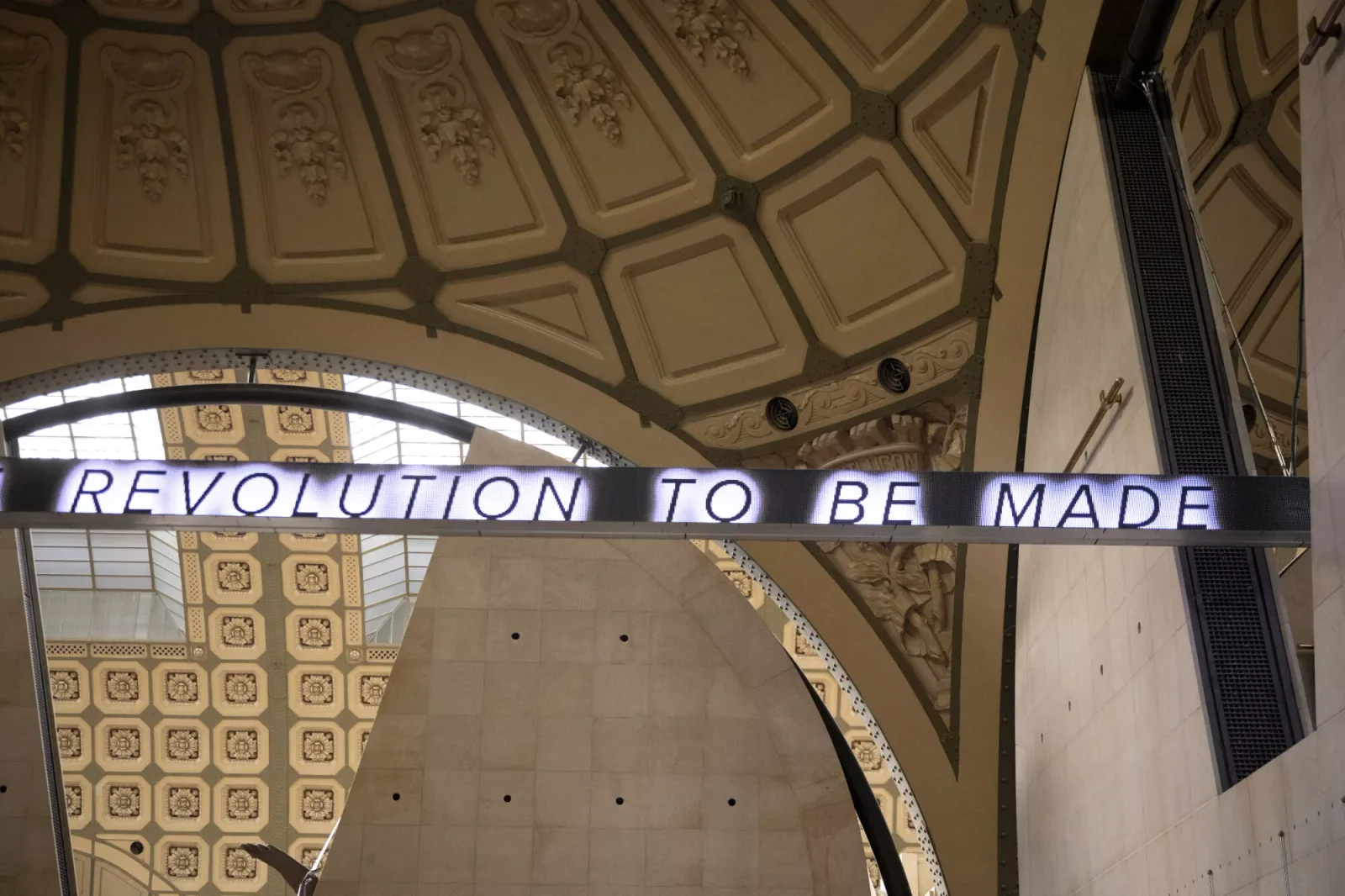
Paris, 20 October 2026 to 21 February 2027. The museum's page puts the facade projections on the Seine side at 18 to 22 October, dusk to 11 pm, so the last night is 22 October. Inside, a site-specific LED sign runs coloured streams of text through four galleries, alongside 19 stoneworks, 17 benches and two columns, most of them engraved. The museum counts more than 750 unique texts from 424 sources and 73 authors.
via Musée d'Orsay ↗
Lightwall at Dutch Design Week
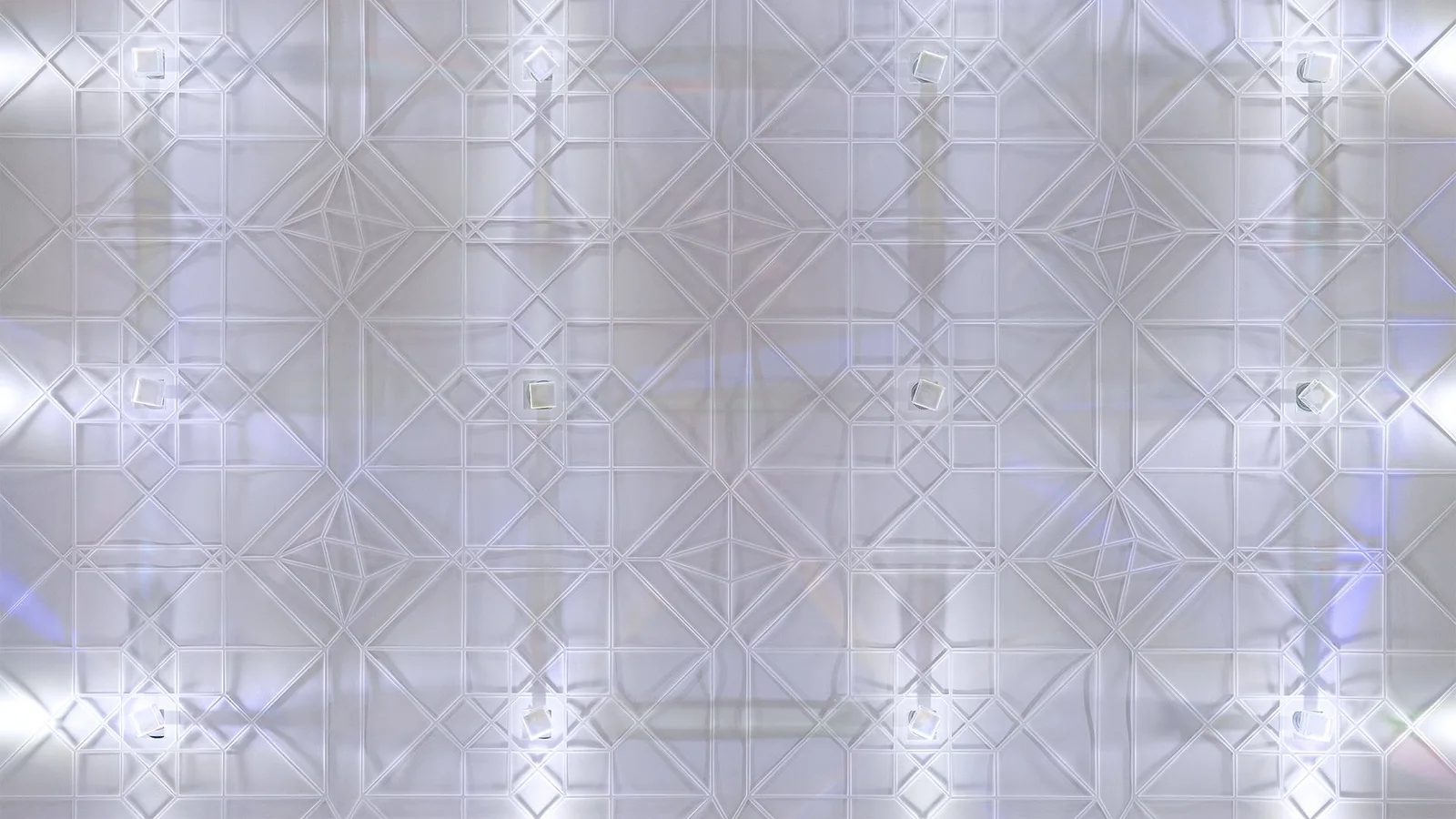
Eindhoven, 17 to 25 October, daily 11:00 to 18:00, at Art House – United Cowboys, Kleine Berg 62. Rita Sus (Emit Light) and technical director Zach Rattner built kinetic prisms that throw light over a hand-cut paper pattern, with locally run AI controlling the light source and the motorised beam splitters in response to visitors. Free with a DDW ticket.
The rest of the month is on the Calendar.
Curated by Neves Creative. Every item links to its original source.