I Love Photons
Brine moved pond to pond for more than a year until it comes out yellow. Sunlight burned into paper through glass spheres. Eight pillars whose height is set by the length of a line of binary. Found this week, posted by the people who made them.
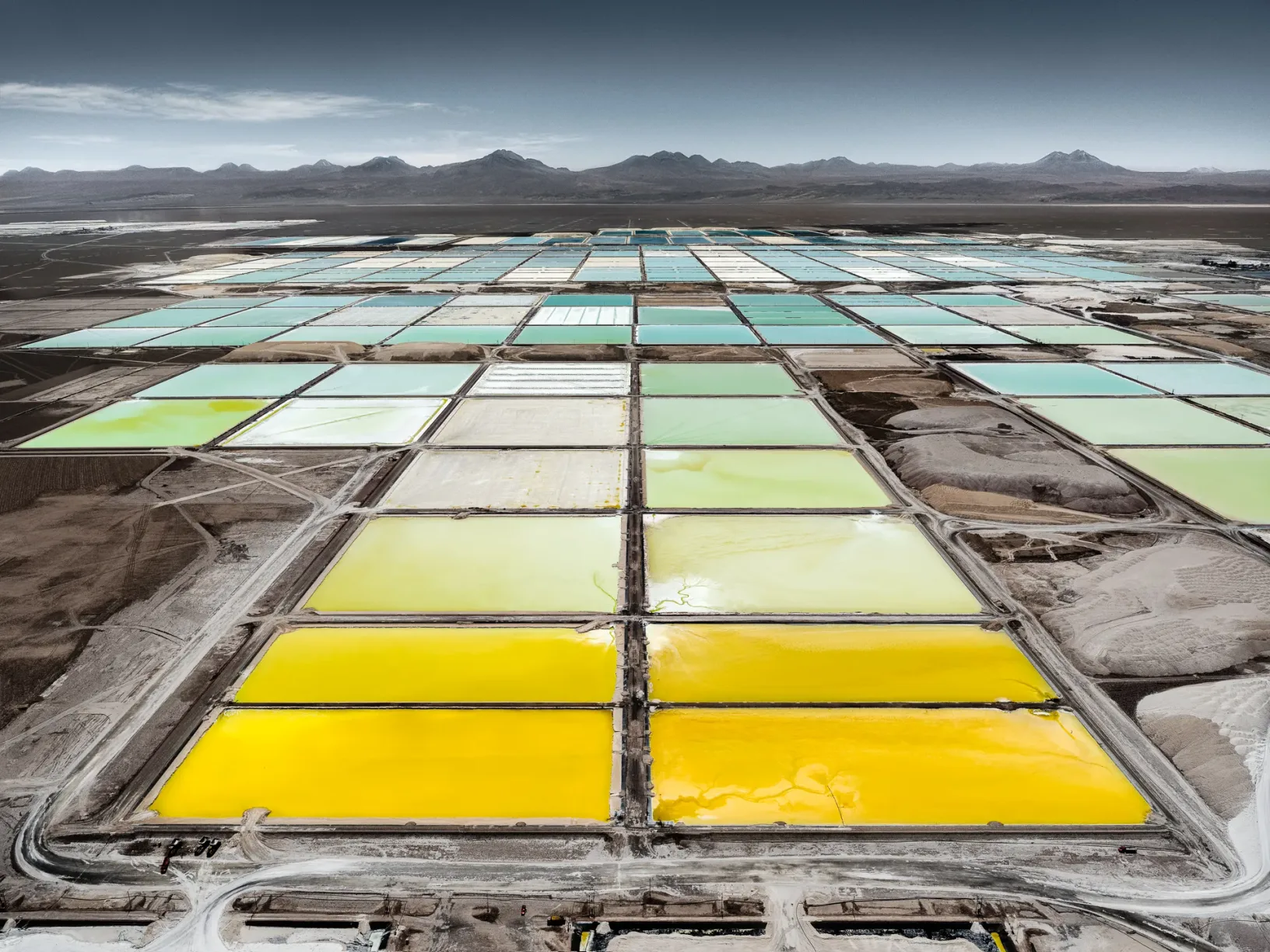
A photograph of an industrial site does not usually explain the industry. This one does. Tom Hegen's frame of the Atacama lithium fields reads back to front: turquoise along the horizon, pale green through the middle, and at the near edge two ponds of a yellow so saturated it looks applied rather than photographed.
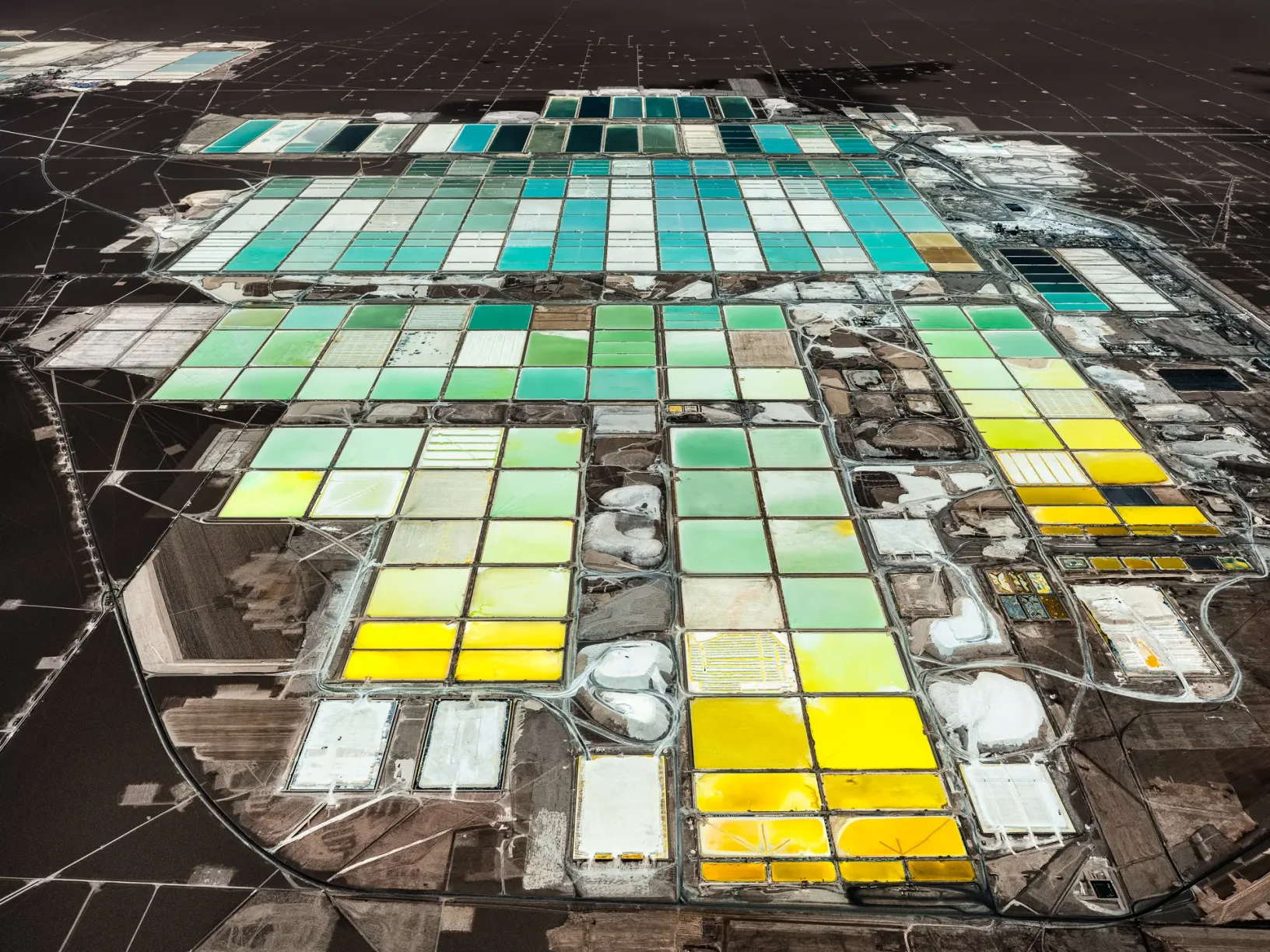
That gradient is not composition. It is time. Brine is pumped from more than a hundred metres beneath the salt flats into open pools and then largely left alone, moving pond to pond for more than a year while different salts crystallise out, until the lithium concentration reaches six percent. The yellow is the far end of that process. The colour is the chemistry having finished.
Which is the whole issue in one picture — the thing that stops you and the thing that explains it are the same thing, and you can see the process without being told it. Everything here was published by the person who made it, and the rest of the issue is four more of those: sunlight burning its own drawing, a line of binary setting the height of a sculpture, a floor of cardboard boxes making weather.
I Love Photons
Photos, film, refracted light, reflected light, the shadow of light, the color of light, be it projected or printed. Without these amazing properties our world would be a dark void.
This week: sunlight through a glass sphere, burning its way across a sheet of paper as the day goes by. Binary written down the side of eight pillars, deciding how tall each one gets to be. Brine in a desert, sitting in ponds for more than a year until it comes out yellow. Cardboard and small motors, filling a room with sound.
Four people who made something out of light, and said how.
Six years photographing the ground the clean-energy transition is dug out of
Brine rich in lithium is pumped from "more than 100 meters underneath the salt flats" south of San Pedro de Atacama into a chain of open pools, and then largely left alone.
His own account of what happens next is one sentence long and does all the work. The brine "gets pumped for more than one year from pond to pond until the lithium concentration in the water reaches a level of 6% and a deep yellow hue."
So the colour is not a filter and not a grade. It is concentration — the deep yellow is the chemistry having finished. The field is big enough that he notes it is "even visible from space".
The photographs come out of six years spent documenting the regions the clean-energy transition is dug out of.
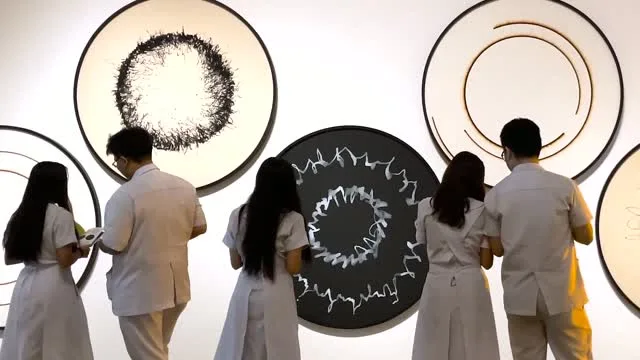
The sun burns the drawing, and a motor turns the paper to meet it
Two rows of glass spheres sit above a sheet of fireproof paper. They are lenses. They gather the sun into points hot enough to scorch, and because the sun moves, the scorch moves with it. The drawing is made by the day passing over the table.
The studio's account is exact. The spheres "acted as lenses, focusing the sun's rays into points of intense light that varyingly marked the paper as the position of the sun changed over the course of the day."
The companion series hands the pen to the weather. Pendulums hung above the pavilion walls were pushed by wind, and they "guided drawing utensils across the surface of the canvas". Underneath both, motors turn the paper and the canvas slowly, "echoing the Earth's rotation", drawing the lines out longer than a still sheet would allow.
Nothing in it depicts the sun or the wind. The sun and the wind hold the pen.
 Watch on Instagram
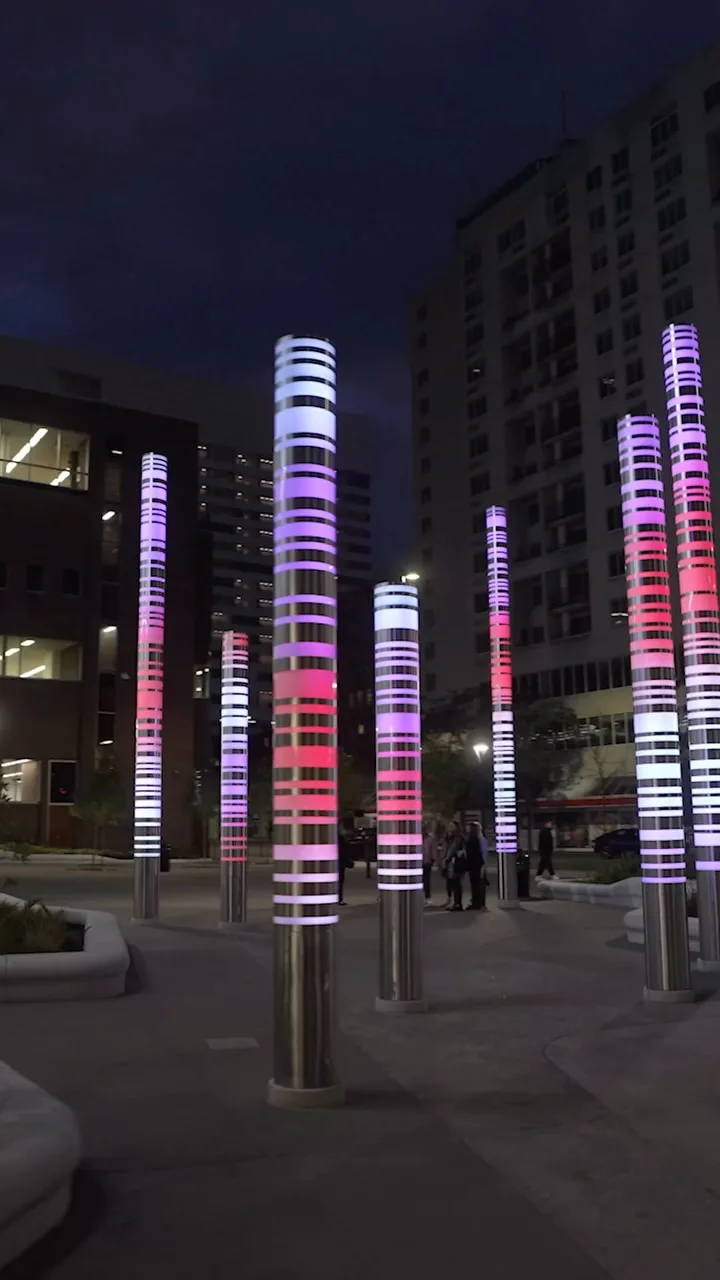
Eight pillars, and the length of the code decides how tall each one stands
Each pillar carries one principle of Greek thought, from Humanism to Restless Curiosity, written on it in binary. The rule turning that into a sculpture is one line long: the longer the code, the taller the pillar. The shortest idea stands thirteen feet, the longest twenty-eight.
More than 29,000 LEDs run on a wireless mesh, and Lewin wrote the control code herself — written, she says, so the light moves the way wind moves through trees, with no sequence ever repeating.
A visitor can be told the rule in one sentence and then see it, standing in front of them, in the difference between a short pillar and a tall one.
 Watch on Instagram
Several hundred cardboard boxes, and the room does the rest
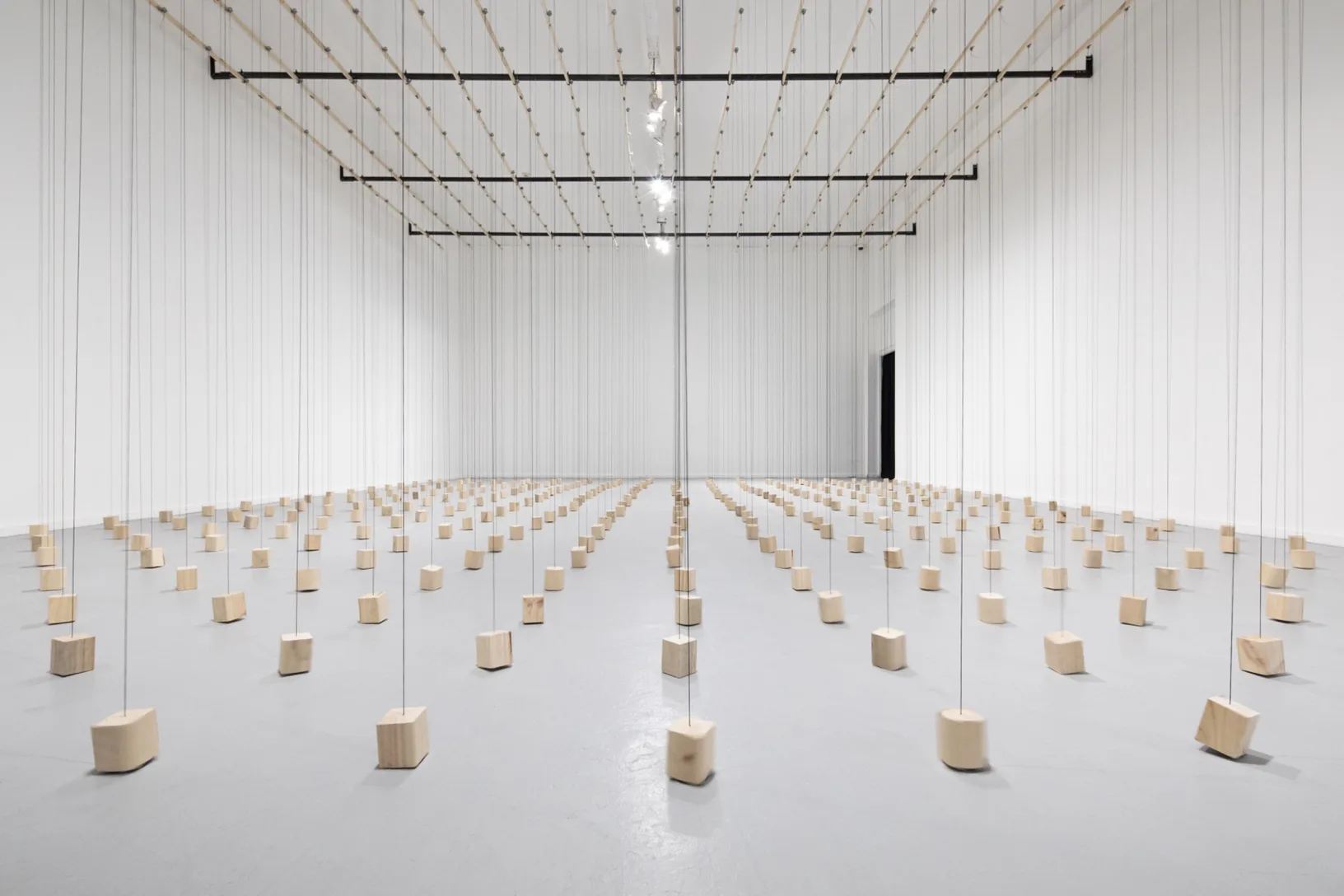
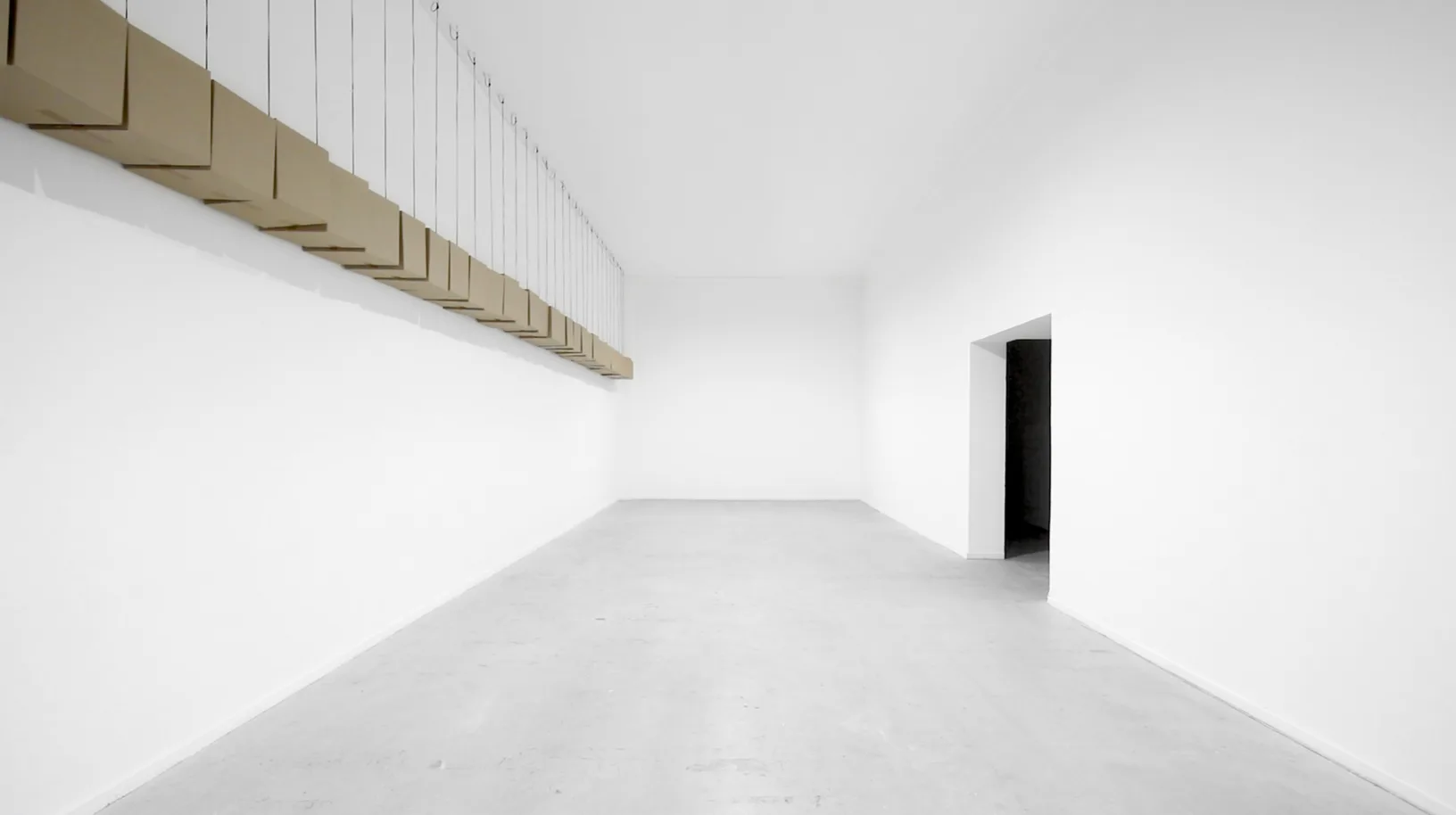
The materials list has not changed in twenty years: small DC motors, cardboard, wire, cotton. Each unit is trivial. The room is not.
Look at the wide view. Several hundred cardboard boxes sit on the floor of a white hall, each with a wooden stick rising out of it, each stick on a wire running the full height of the room to a rig in the ceiling. One box is a shrug. A floor covered in them is weather.
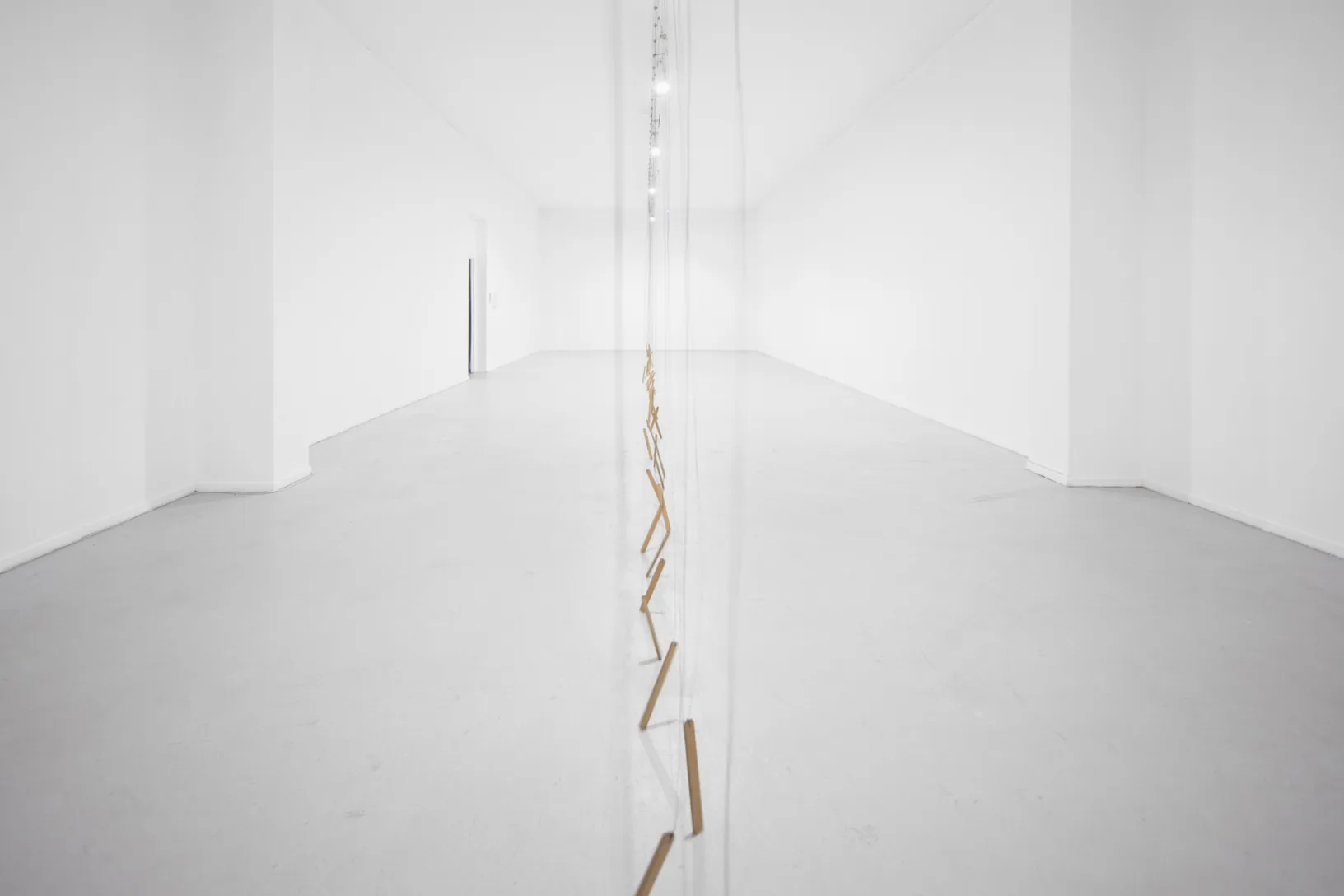
The second room spends the same idea differently: a single line of sticks down the centre of an empty gallery on near-invisible wires. A thousandth of the quantity, the same parts. Which is the argument — the effect scales by repetition, not by the cleverness of the part.
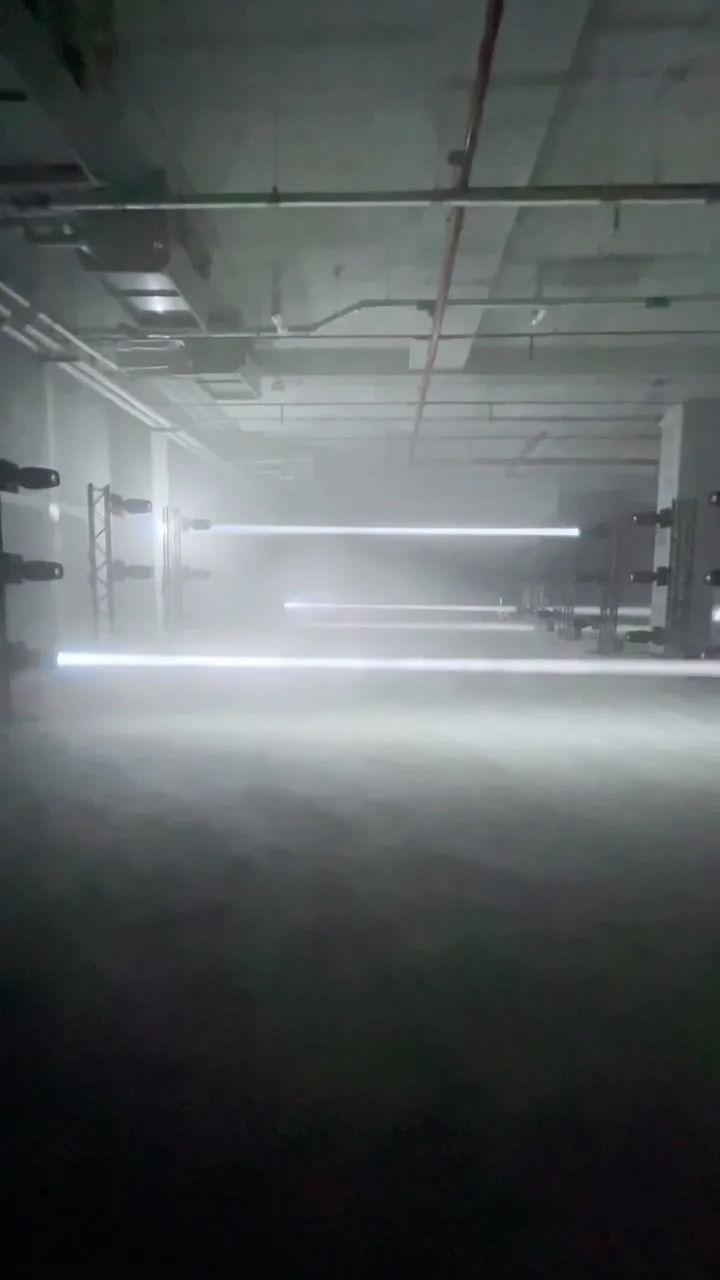
NONOTAK open DUAL V.1 in Bangkok
Noemi Schipfer's drawn light and Takami Nakamoto's sound, walked through rather than watched. DIAGE Festival, Cloud 11, Bangkok, 31 October to 1 November. The festival has closed; whether the installation stays up is not stated.
 Watch on Instagram
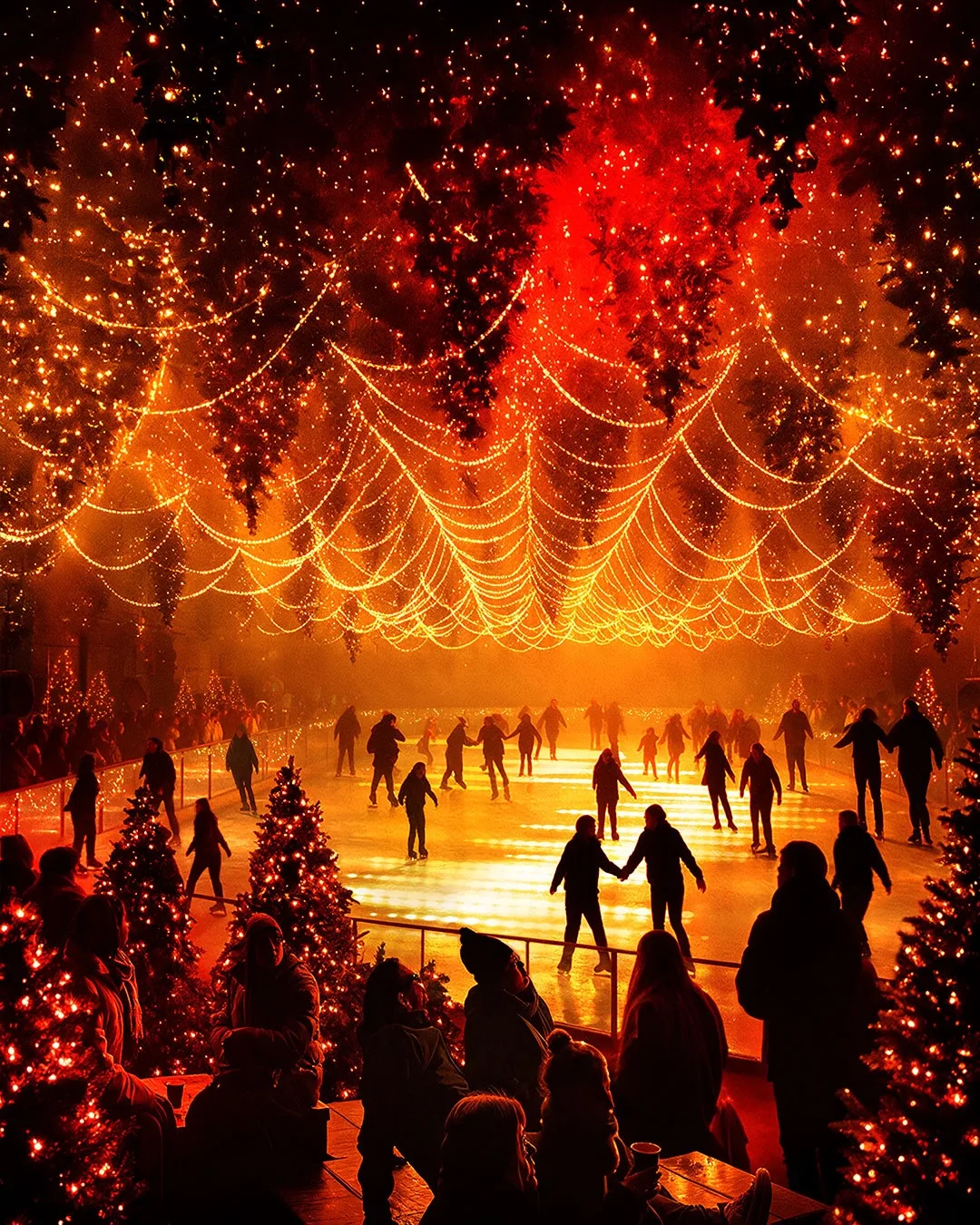
Christopher Bauder floods the Transformator with Winterlights
An inverted forest of hanging firs over an enlarged ice rink, thousands of lights set into the ice, and a score by Chris Kuijten. Berlin, 4 November to 14 February 2027.
 Watch on Instagram
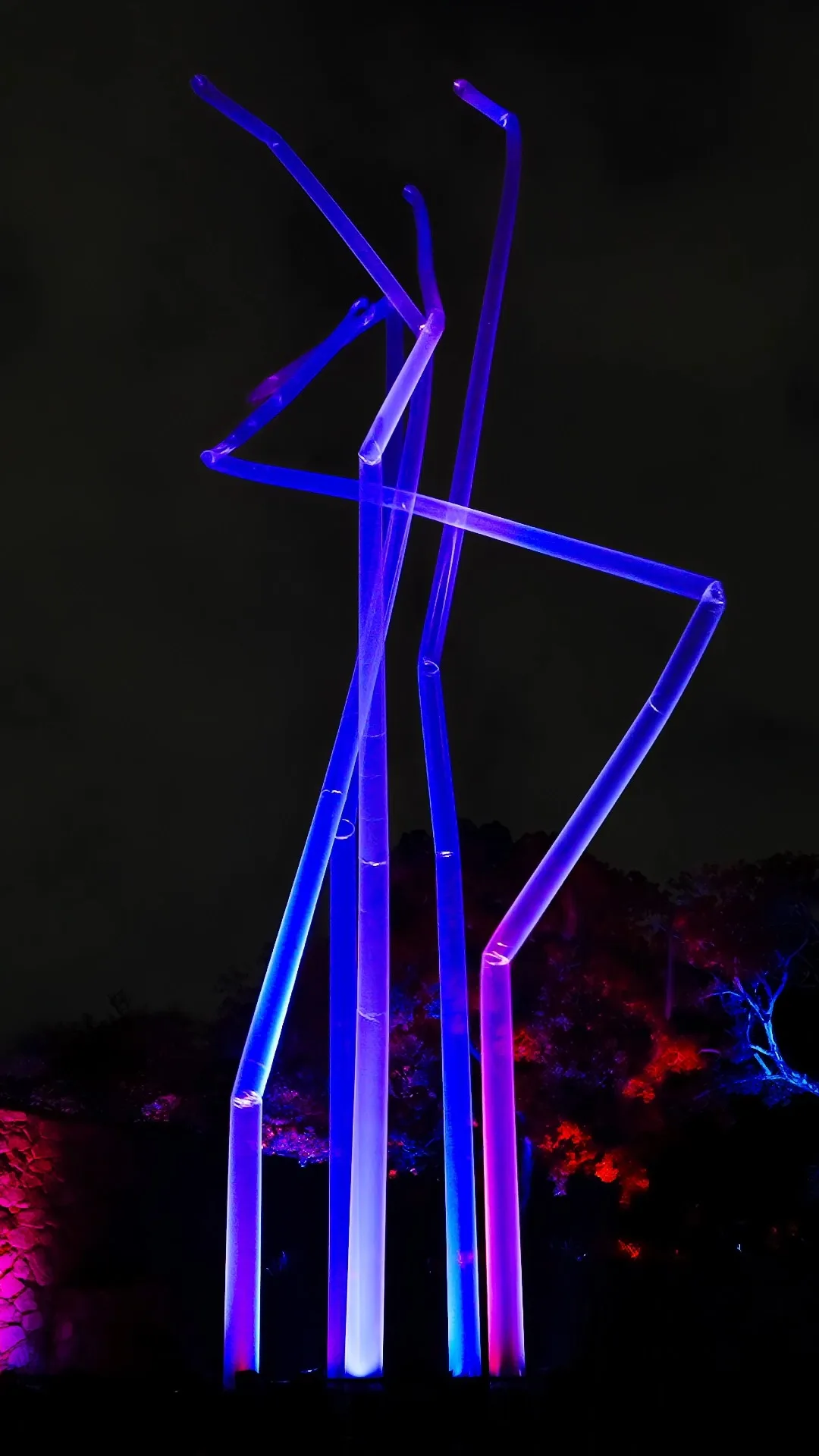
teamLab lights the Fukuoka Castle ruins until January
Four tiers of seventeenth-century stone wall used as the site, the work changing with wind, rain and where people stand. Fukuoka, to 11 January 2027.
 Watch on Instagram
Curated by Neves Creative. Every item links to its original source.